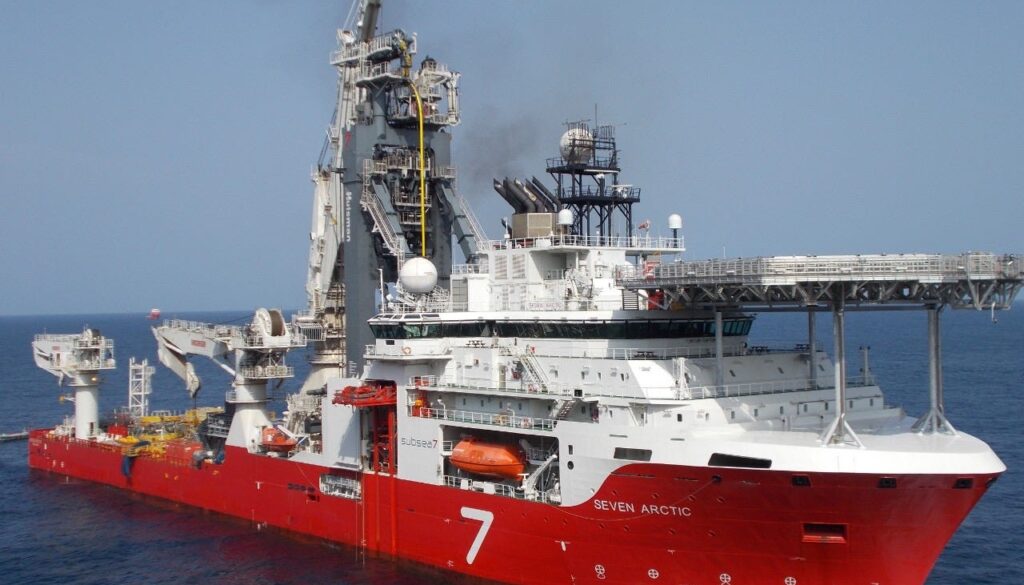
Subsea7
Subsea7 spent the last two months of its independent life the way it spent the previous
twenty five years, winning contracts on four continents. Angola in April, a subsea tie back for ExxonMobil’s Redevelopment 2.0 project run out of Paris, Luanda, Lisbon and Sutton offices simultaneously. Norway in May, a pipeline tie in for Vår Energi’s Goliat Gas Export Project run out of Stavanger. The US Gulf in June, a flowline for Murphy Exploration run out of Houston. Germany the same week, monopile installation for an offshore wind farm run through Seaway7, its renewables arm. This is a company at the absolute top of its operational game, and on July 22, 2026, tomorrow, the European Commission is expected to open a full scale Phase II antitrust investigation into whether that company should be allowed to keep existing at all.
The deal under investigation is the merger with Saipem, first proposed in February 2025, terms finalized that July, and structured as a true merger of equals on paper. Subsea7 shareholders will receive six point six eight eight Saipem shares for every share they hold, plus an extraordinary dividend of four hundred fifty million euros, plus a further hundred five million euros tied to an ongoing divestment, before the deal closes. Each side ends up owning half of the combined company. But the combined company will be called Saipem7, not Subsea7Saipem or any name that survives Subsea7’s own brand at all. It will be incorporated in Italy. It will be headquartered in Milan. Eni and CDP Equity, Saipem’s reference shareholders and both tied directly to the Italian state, CDP Equity being the investment arm of Italy’s own treasury, signed a shareholders agreement committing their votes in favor before the ink on the merger terms was even dry. Siem Industries, Subsea7’s largest shareholder and the vehicle of Kristian Siem, the man who has chaired this company and its predecessors since 2002, signed the same commitment. A Norwegian shipping family that built an offshore contractor out of a 1954 predecessor company is handing the keys, the name, and the domicile to Rome, even though the numbers say Subsea7 is currently the better business.
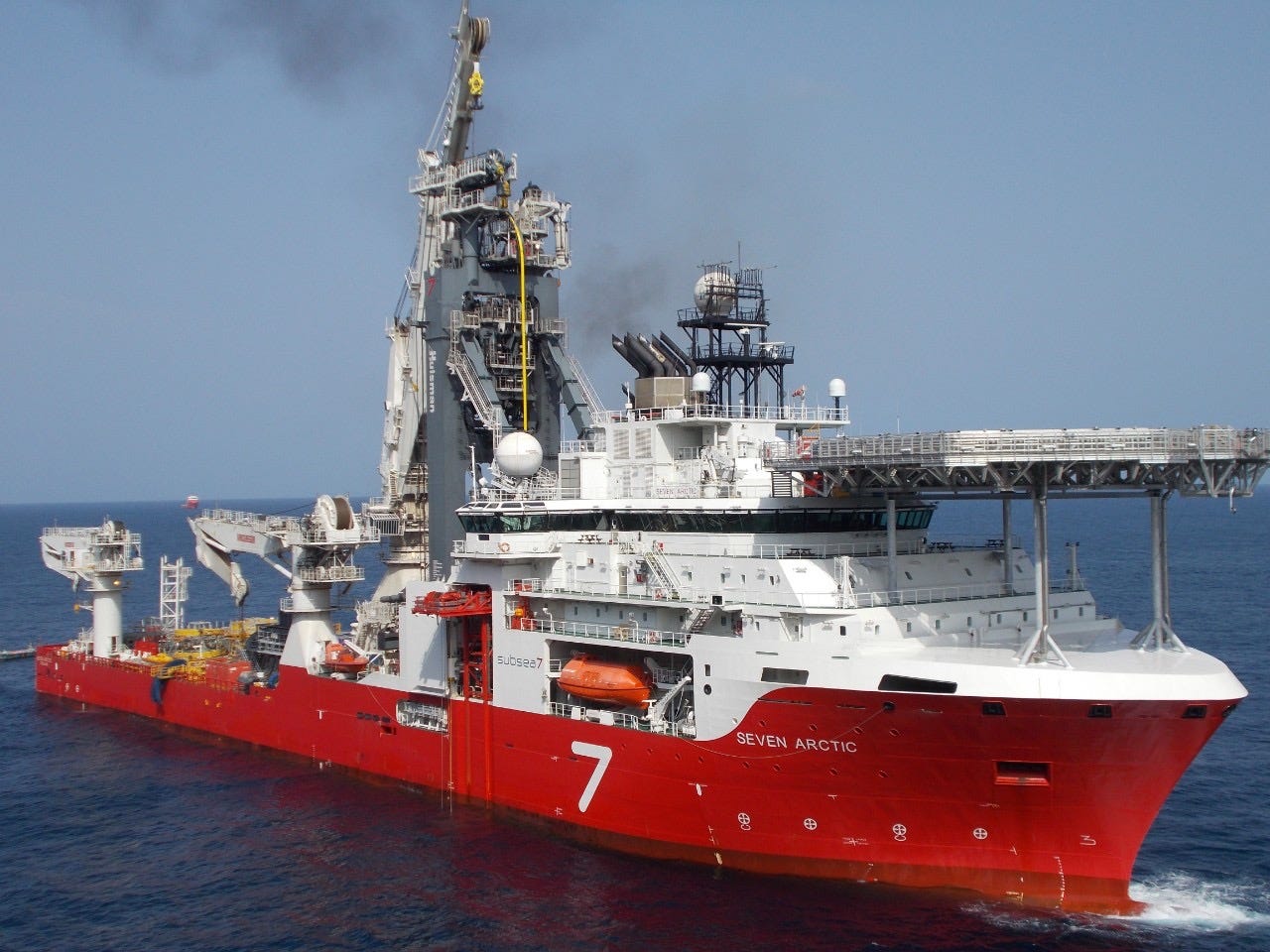
Understand what Subsea7 actually builds before the merger numbers make sense, because EPCI is not a marketing term, it is the whole job in four letters. Engineering, procurement, construction, installation, meaning the same company that designs the flowline also buys the steel, fabricates it, and puts it on the seabed, rather than handing each stage to a different contractor. The Murphy contract in the Gulf runs to water depths of eighteen hundred fifty metres, deep enough that a diver cannot be sent down at all, everything has to be handled by remotely operated vehicles working off a specialised construction vessel, while the Vår Energi pipeline in the Barents Sea, twelve point seven kilometres of ten inch uninsulated carbon steel line, sits in far shallower water where diving support is still viable and the engineering problem shifts from pressure and umbilical control to cold weather material selection. Pipelay itself comes in three methods and the choice is not cosmetic. S-lay, the pipe leaving the vessel in a shallow curve, works in moderate depths and is the cheapest per kilometre. J-lay, the pipe leaving near vertical off a tower on the vessel, handles the deepwater tension loads S-lay cannot. Reel-lay, the entire pipeline spooled onto a giant reel onshore and unspooled at sea, is fastest for smaller diameter lines like the flowline tie backs that make up most of Subsea7’s recent contract wins. A company that can deploy all three methods out of the same fleet, rather than chartering in specialist tonnage project by project, is the actual competitive moat behind the word SURF, subsea umbilicals, risers and flowlines, that shows up in every one of Subsea7’s own press releases. That fleet, and the engineering judgment to deploy it correctly, is the asset Saipem is paying for. It does not show up as a line item anywhere in the merger terms.
Those numbers, reported in the first quarter of 2026 as a standalone company for what may be one of its last times, are worth sitting with. Revenue of one point eight billion dollars, up seventeen percent year on year. Adjusted EBITDA of three hundred eighty five million dollars, up sixty three percent, pushing the margin from fifteen percent to twenty one percent in a single year, with the Subsea and Conventional segment running a twenty four percent margin and Renewables at twelve percent. Net income of ninety seven million dollars against sixteen million dollars a year earlier, a sixfold increase. Backlog of thirteen point five billion dollars, five and a half billion of it already scheduled for execution this year, and five billion scheduled for 2027, up seventeen percent since the start of the year. Net cash, including lease liabilities, of a hundred ninety eight million dollars, up from twenty one million dollars at the end of 2025. Full year guidance was raised to revenue between seven point four and seven point eight billion dollars at roughly a twenty three percent EBITDA margin. This is not a company that needed rescuing into a merger. This is a company whose stock returned a hundred twenty percent over the prior year, and it is still the junior partner in naming rights.
Here is the stress test, and it runs on two tracks that have nothing to do with either company’s operating performance. Brazil cleared the merger unconditionally. Australian competition authorities have already opened an in depth review, and the European Commission is set to follow tomorrow with a full scale Phase II investigation, both worried the combined entity, a diversified fleet of more than sixty construction vessels, projects in over sixty countries, a combined backlog of forty three billion euros, concentrates too much of the world’s subsea installation capacity in one company. No divestiture remedies have been offered yet. If either regulator forces asset sales or delays completion past the second half of 2026 target, the four hundred million euros in annual synergies both companies are counting on by year three slips further out, and Subsea7’s own shareholders, who approved a deal built around Saipem’s name and Saipem’s domicile in exchange for slightly more than half the economics, are left holding a longer runway to a payoff that was already built on ceding almost everything except the number on the balance sheet.
There is a version of this story where regulators are simply doing their job, checking that one company does not end up controlling too much of a market that only has a handful of credible players left in it after a decade of consolidation, Transocean and Valaris, McDermott circling its own third refinancing, Halliburton automating its own labor model away. There is another version where the real story already happened in February 2025, when two boards decided the winner of a merger of equals would be determined not by which company reported better margins but by which shareholders had a state investment vehicle willing to fight for the name plate. Subsea7 built the better quarter. Italy is getting the headquarters.
Label for this one: Subsea7 vanishes. Not the vessels, not the backlog, not the thirty four countries of operations that made this company worth merging with in the first place. The name. The one thing a fifty fifty merger of equals was never actually going to split evenly.
Sources: Subsea 7 S.A. first quarter 2026 results announcement, Subsea7 company news releases April through June 2026, Saipem and Subsea7 merger agreement announcement and investor presentation July 2025, Offshore Magazine reporting on EU and Australian regulatory review July 2026, Subsea7 company history archive, Investing.com earnings call summary May 2026.