Bourbon Offshore
On July 18, 2019, a letter arrived at Bourbon Corporation’s headquarters demanding
$800M in cash, immediately. It came from ICBC Leasing, the Chinese state linked lessor that had financed 46 of Bourbon’s offshore support vessels through sale and leaseback contracts. ICBC was not calling in a defaulted loan. It was exercising a clause that let it demand seven years of remaining bareboat charter hire paid upfront, in cash, on a fleet the company no longer earned enough from to cover monthly rent, let alone a lump sum equal to a decade of payments compressed into one invoice.
Bourbon had roughly 483 vessels at the time and had been the largest offshore support vessel operator in the world. Within weeks it filed for court protection in Marseilles. By December, a consortium of creditor banks led by Société Générale owned the company outright. Six years later, in July 2025, Bourbon went through a second court supervised restructuring, this time handing control to two American private equity firms, Davidson Kempner and Fortress. The fleet that once ran past 480 vessels now numbers 223.
Two collapses in one company across six years is not a story about commodity prices alone. It is a story about how a fleet gets financed, and what happens when the financing structure itself becomes the risk nobody priced.
What Bourbon Actually Built
Bourbon’s rise ran on standardization at scale. The company ordered dozens of near identical hulls, most visibly the Bourbon Liberty series, from low cost yards to drive down capital cost per vessel and simplify crew training and spare parts across the fleet. On top of that standardized hull, Bourbon pushed heavily into Dynamic Positioning class 2 and class 3 vessels, the segment that commands premium dayrates from operators working next to deepwater rigs where a vessel cannot simply drop anchor.
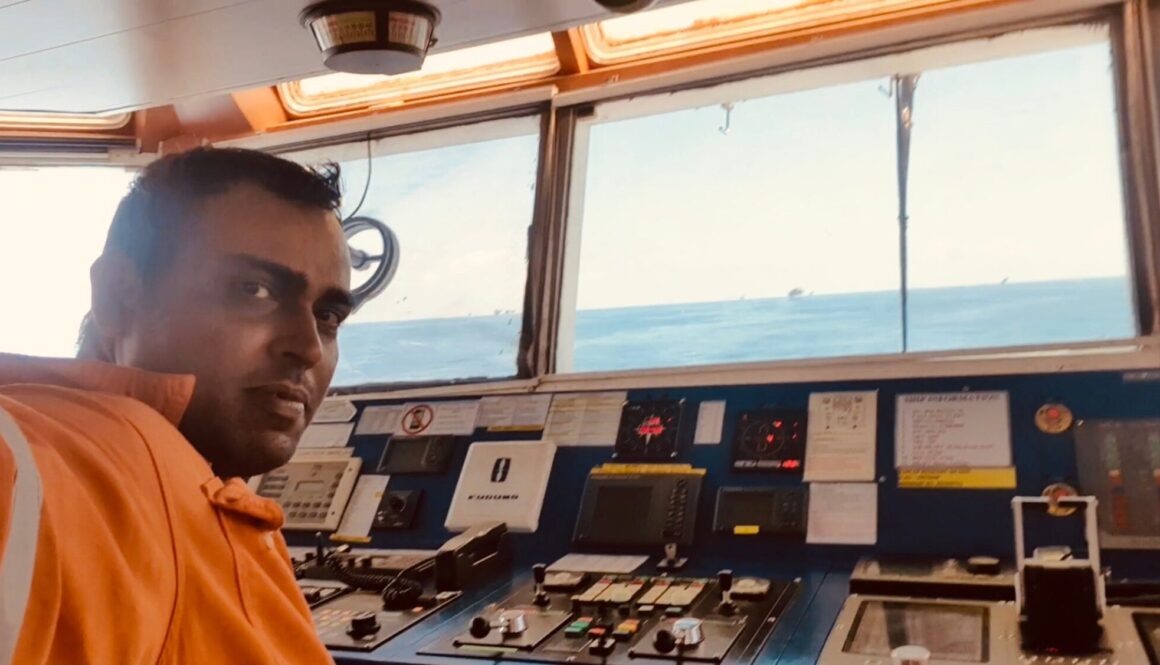
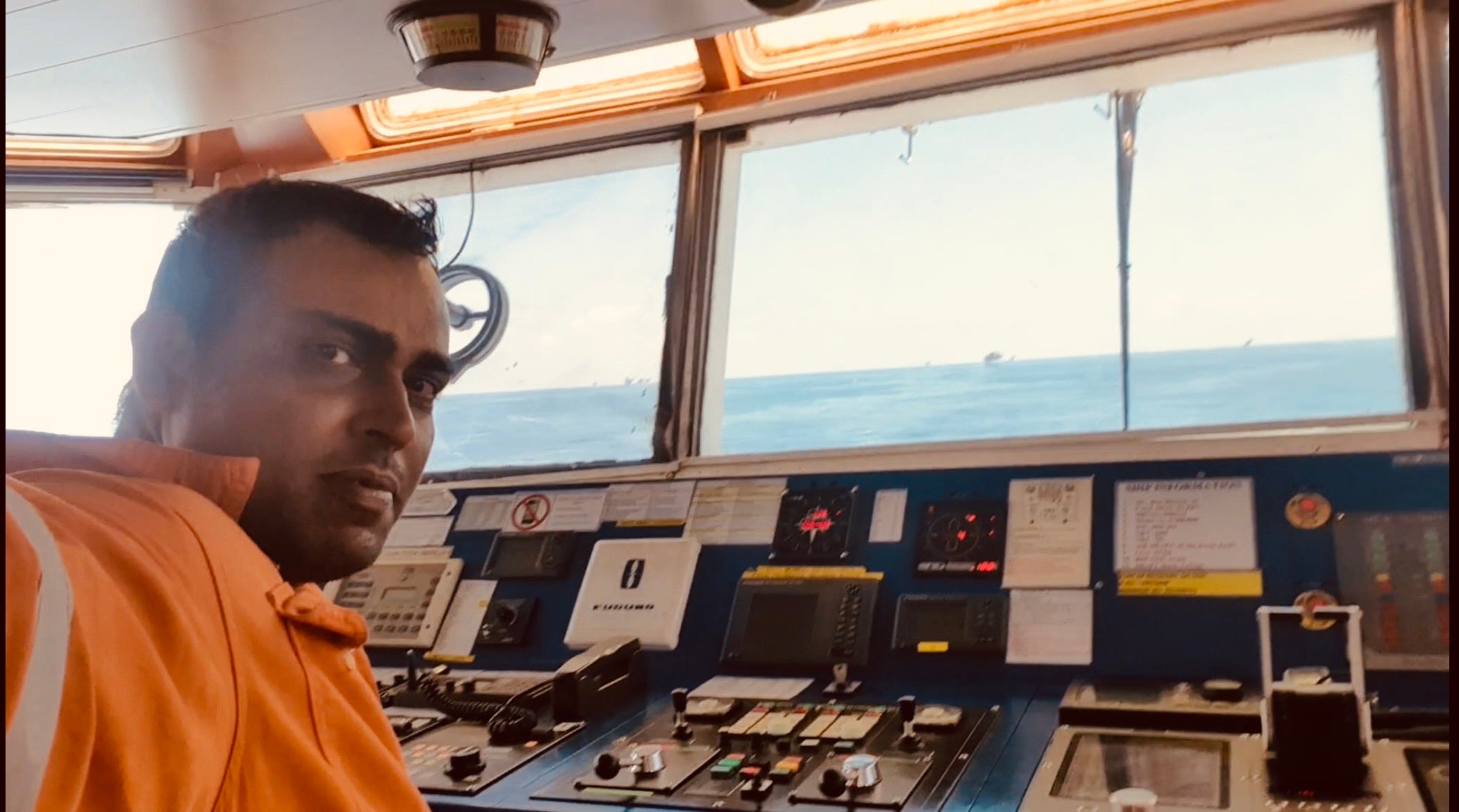
A DP2 vessel holds station automatically using thrusters, guided by a control loop pulling position data from differential GPS, laser tracking systems, and subsea acoustic transponders, while running redundant power generation split across independent electrical buses so a single equipment failure cannot cause the vessel to drift into a rig or a wellhead. Certifying and maintaining that system is not optional overhead. Annual DP trials, five year failure mode reviews, and continuous calibration against classification society standards are the price of keeping the DP2 designation, regardless of whether the vessel is working a premium contract or sitting idle at a quay.
None of this technical description is where the draft went wrong. Where it went wrong is treating DP2 specification itself as the flaw.
How The Fleet Got Financed
Sale and leaseback financing let Bourbon expand its fleet faster than a straight bank loan would have allowed. The company sold vessels to a lessor, in this case largely ICBC Leasing, and leased them back on long term bareboat charters, treating the arrangement as an operating cost rather than a debt principal on the balance sheet. This is a normal tool in capital intensive shipping. Airlines use the same structure for aircraft.
The risk sits in the acceleration clause. A standard bank loan in distress gets renegotiated, extended, or restructured through a workout process measured in months. A sale and leaseback agreement can include language letting the lessor demand the entire remaining lease value in one payment if the lessee breaches specific terms. ICBC’s $800M demand in July 2019 was exactly that mechanism firing. It converted a monthly cash flow problem, dayrates too low to cover charter payments, into an immediate solvency problem, one lender able to force bankruptcy through a single letter regardless of what the rest of Bourbon’s creditor base wanted.
The Market That Made The Trap Possible
None of this would have mattered if dayrates had held. Platform supply vessel rates in the 4,000 deadweight tonne class ran as high as $35,000 to $40,000 per day in early 2014, a benchmark from S&P Global’s own market research covering the broader PSV segment, not Bourbon specific disclosed data. By 2017, the same vessel class was fixing spot work at $7,000 per day, below the cash cost of running a basic crew, let alone a DP2 certified one. The downturn traces to the 2014 oil price collapse, which halted deepwater exploration activity and left the global offshore support fleet oversupplied for years.
At $7,000 a day, a DP2 vessel cannot cover its own certification and crewing floor. Highly paid, certified DP operators and specialized electricians running split bus power management systems do not become optional because the charter rate fell. That fixed cost floor, combined with charter payments to ICBC that did not fall with the market, is what turned a cyclical downturn into a liquidity crisis with no slack left to absorb it.
The Correction The Draft Missed
Here is the part that changes the whole verdict. DP2 tonnage did not stay unprofitable. By 2023, the exact same vessel class Bourbon over built, large PSVs with more than 900 square metres of clear deck space, was fixing at $30,000 per day and above under Tidewater, the operator that absorbed much of the offshore support consolidation that followed Bourbon’s collapse. Tidewater’s own reporting put per vessel annual revenue in that class above $10M, with margins running multiples over cash operating cost.
The asset was never the mistake. A DP2 platform supply vessel is exactly what deepwater operators need and exactly what they will pay premium rates for when the exploration cycle is running. What killed Bourbon was financing that fleet through a structure that could be called all at once by a single counterparty, at the precise moment the market could least absorb it. Tidewater, Solstad, and the other operators that survived the same downturn financed their fleets differently and lived to fix pricing power when the market turned. Bourbon financed correctly for the asset it wanted to own and incorrectly for the balance sheet risk that asset carried.
Two Restructurings, One Pattern
The 2019 restructuring cut Bourbon’s debt from roughly €2.648B to €1.065B, converting the majority of it to equity held by the same banks that had lent against the fleet, Société Générale, BNP Paribas, Crédit Agricole, Crédit Mutuel, BPCE, alongside ICBC Leasing itself taking an 18% equity stake and Standard Chartered 10%. The plan targeted a fleet reduction to under 350 vessels by 2021, down from near 460.
That was not the end of it. By 2024, Bourbon had launched another transformation plan, and in July 2025 the Marseille court approved a second capital restructuring, described by the company itself as a technical accelerated safeguard procedure rather than a crisis filing. Davidson Kempner and Fortress became majority shareholders. Leverage came down below 1.5 times EBITDA. The fleet, by the time the deal closed in December 2025, stood at 223 vessels, generating $855M in 2024 revenue, well under half the scale the company once commanded.
Two ownership changes in six years is not evidence that the underlying offshore support business is broken. Revenue near $855M on 223 vessels, and a market where comparable DP2 tonnage is earning premium rates again, argues the opposite. It is evidence that the first restructuring fixed the debt load without fully fixing the financing structure risk that caused the original failure, and that a second, calmer recapitalization was needed to actually align the balance sheet with a fleet this specialized and this capital intensive.
The Honest Read
Bourbon did not fail because deepwater operators stopped wanting DP2 capability. They wanted it enough in 2023 to pay Tidewater premium rates for the identical asset class. Bourbon failed because a sale and leaseback structure with a single foreign lessor carried an acceleration clause that could turn a cyclical dayrate trough into an immediate cash demand no restructuring negotiation could outrun in time. The engineering was sound. The capital structure had a single point of failure, and the market found it during the worst possible quarter to find it.
That is the actual lesson for anyone building a specialized asset fleet against premium day rate assumptions. Match your financing tenor and your counterparty concentration to your asset’s specialization, not just your debt to EBITDA ratio. A fleet that only earns its keep at cycle peak dayrates needs financing that cannot be called at cycle trough. Bourbon built the right ships and signed the wrong leases, and it took two restructurings and three ownership changes across a decade to separate those two facts from each other.
#CrudeTruth #OilfieldServices #OffshoreSupportVessels #Bourbon #CapitalStructure #DynamicPositioning #OSV #MaritimeFinance #OilAndGasCapitalAllocation #RigEconomics