Rosneft : Company Putin built to avoid sanctions got sanctioned anyway
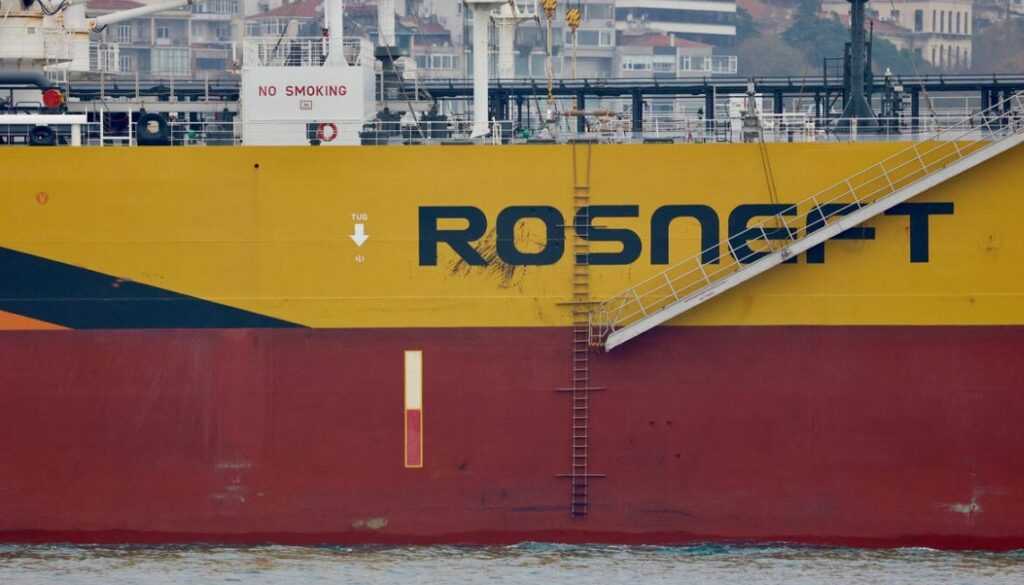
October 22 2025, hours after US markets closed. The Treasury Department adds Rosneft and Lukoil, Russia’s two largest oil companies, to its Specially Designated Nationals list,
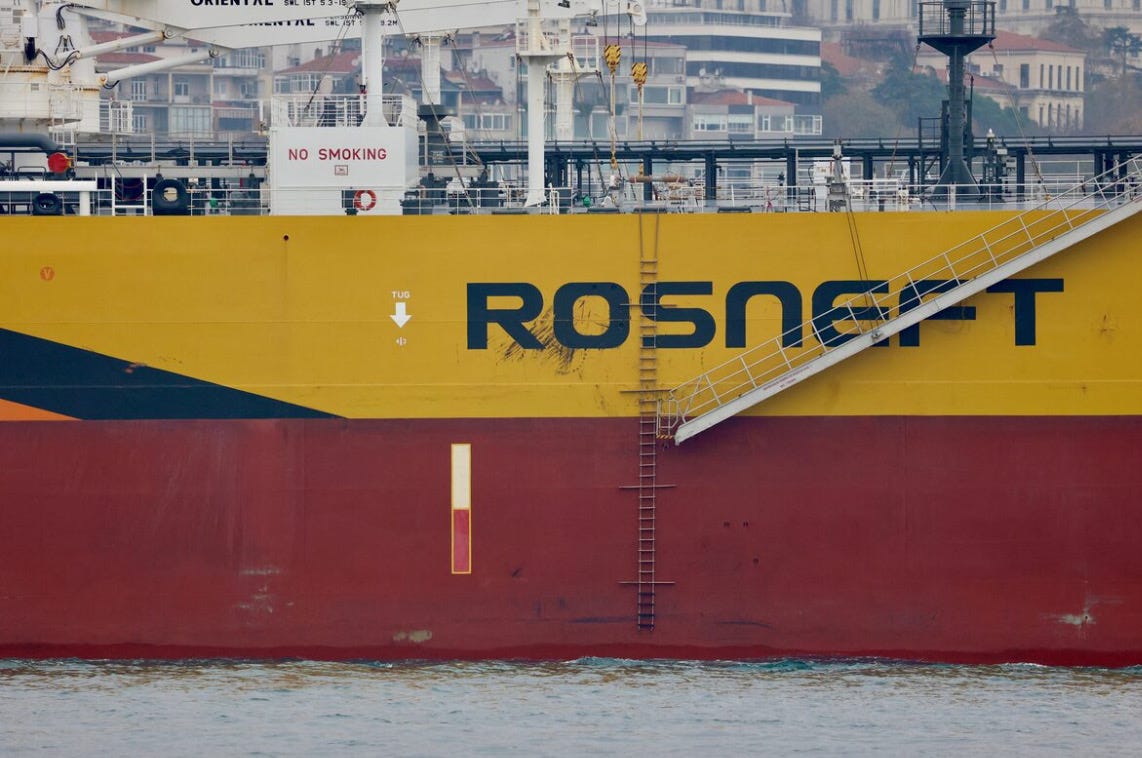
the first Russia related sanctions the second Trump administration has imposed, arriving days after a planned Budapest summit between Trump and Putin collapsed before it happened. Brent jumped five percent by the next morning. Treasury Secretary Scott Bessent framed the decision around Putin’s refusal to end the war in Ukraine, adding that Washington stood ready to do more. The United Kingdom had already frozen both companies’ assets a week earlier. The European Union approved its nineteenth sanctions package the same day, banning imports of Russian liquefied natural gas outright. For the first time since the war began, all of Russia’s largest oil companies sat under direct blocking sanctions simultaneously, not the secondary, workaround riddled restrictions that had let Rosneft keep exporting for three and a half years. And Rosneft’s full year 2025 results, reported months later, still showed a company generating positive free cash flow for a twenty second consecutive quarter.
THE NUMBERS, WHERE OVERSUPPLY MET SANCTIONS AT THE SAME TIME
Rosneft’s full year 2025 IFRS results tell a story of a company absorbing multiple simultaneous shocks rather than a single clean collapse. Revenue fell eighteen point eight percent to eight point two three six trillion rubles. EBITDA dropped twenty eight point three percent to two point one seven three trillion rubles. Net income attributable to shareholders slumped seventy three percent to two hundred ninety three billion rubles, roughly three point six billion dollars, a headline number that reads catastrophic until measured against what the company still managed to hold onto underneath it. Adjusted free cash flow nearly halved to seven hundred billion rubles, and it still came in positive, marking twenty two straight quarters without a negative cash flow print, a streak that survived a war, an oil price collapse, and now direct sanctions all landing inside the same reporting period.
Production held remarkably steady through all of it. Rosneft produced a hundred twenty one point six million tonnes of oil equivalent in the first half of 2025 alone, eighty nine point three million tonnes of crude, close to three point six seven million barrels a day, plus thirty nine point three billion cubic metres of gas. The company reported six new field discoveries and a hundred twelve new hydrocarbon deposits found across the year, a reserve replacement pace that would be remarkable for any company operating under normal conditions and reads almost defiant for one operating under this many. Refining told a weaker story, throughput falling to seventy five point seven million tonnes for the year on maintenance, logistics bottlenecks, and what the company called price driven optimization, though the oil conversion rate actually improved to seventy seven point six percent, and Rosneft still supplied forty point three million tonnes of refined product to the domestic market, twelve point three million tonnes of gasoline and sixteen point four million tonnes of diesel, keeping Russia’s own fuel supply intact even as export economics deteriorated around it.
Capital expenditure fell five point seven percent to one point three six trillion rubles as the company tightened project screening, yet Vostok Oil, Rosneft’s flagship Arctic development, kept advancing regardless, seismic surveys, drilling campaigns, and major pipeline and port infrastructure work at Sever Bay continuing through the year, with pilot production now underway at the Payakhskoye and Ichemminskoye fields. A company watching its near term profitability get cut by more than two thirds is still pouring capital into a project that will not deliver meaningful volume for years, a bet that whatever sanctions regime exists today will look different by the time Vostok Oil actually needs an export market.
SECHIN’S OWN EXPLANATION, AND WHO HE BLAMES
Chief executive Igor Sechin has been unusually candid in attributing the damage, and unusually willing to criticize institutions closer to home than Washington. He pointed first at what he called a significant oversupply in the global oil market, driven largely by OPEC producers, warning as early as mid 2025 that the surplus could reach two point six million barrels a day by the fourth quarter and keep prices weak well into 2026. He also took direct aim at Russia’s own central bank, arguing that an elevated key interest rate, averaging above nineteen percent across 2025, artificially strengthens the ruble in a way that erodes export revenue and state income alike, an unusual public break between the head of Russia’s largest company and its own domestic monetary authority. Sechin described freight rates for shipping Russian oil from the Baltic to India as having topped twenty dollars a barrel, and summarized the year in a single phrase, an ideal storm, in which price spikes tied to the Iran war were offset almost immediately by rising costs elsewhere in the system.
SANCTIONS THAT FINALLY MEANT SOMETHING
For three and a half years, Rosneft had operated under sectoral sanctions that restricted specific activities, deepwater and Arctic offshore project financing, shale technology transfers, new equity and debt issuance, without ever fully blocking the company from the global financial system. The October 22 designation changed the category entirely. Rosneft and Lukoil moved to full blocking sanctions, meaning any US person is now prohibited from transacting with either company at all, and under the fifty percent rule, that prohibition automatically extends to every subsidiary either company owns a majority stake in, a list running into dozens of entities across multiple countries. OFAC issued a narrow set of wind down licenses, most expiring within thirty days, alongside a standing carve out for the Caspian Pipeline Consortium and Tengizchevroil projects specifically, since those ventures also involve Chevron and would have caused collateral damage to an American company had no exception existed.
The secondary sanctions threat is where this designation actually bites hardest. Any foreign financial institution found to have facilitated a significant transaction involving Rosneft or Lukoil now risks losing its own access to US correspondent banking, a threat serious enough that Indian refiners publicly signaled they would curtail Russian crude purchases within days of the announcement, on top of an existing fifty percent American tariff already targeting India specifically over its Russian oil imports. The UK went further than Washington in one respect, separately designating Shandong Yulong Petrochemical, one of China’s newest and largest refineries and a major buyer of Russian crude, along with several Chinese port operators servicing it, an attempt to reach past Moscow’s own borders into the specific infrastructure keeping Russian barrels moving through Asia.
THE WAR REACHING BACK INTO RUSSIA ITSELF
Ukraine’s own campaign against Russian energy infrastructure compounds everything sanctions are doing from outside the country. Drone strikes have taken an estimated seventeen percent of Russian refining capacity offline at various points through the year, triggering fuel rationing in some regions and pushing wholesale domestic gasoline prices up forty five percent even as global crude prices fell, a genuinely strange domestic inflation story in a country that exports oil for a living. Rosneft’s own refining throughput decline traces partly to this pressure alongside the maintenance and logistics explanations the company offers publicly, and the company’s continued ability to supply over forty million tonnes of fuel to its own domestic market despite the strikes says something real about redundancy built into Russian refining capacity, even as it says something equally real about how exposed that capacity remains to a war showing no sign of ending.
THE POLITICS OF A COMPANY THAT CANNOT AFFORD TO ADMIT WEAKNESS
Rosneft’s dividend policy through this entire period reads like a company determined to project stability regardless of what the underlying numbers say. The company paid five hundred forty two billion rubles in dividends for 2024, fifty one point one five rubles a share, and approved an interim payout of eleven point five six rubles a share for the first half of 2025 even as net income was already collapsing. Management noted the shareholder base grew by nearly a hundred seventy thousand people over the past year, a detail Sechin has used publicly to argue Rosneft maintains financial discipline that rivals fund through debt instead. Whether that framing holds up under continued sanctions pressure is a different question than whether it serves a domestic political purpose right now, reassuring a Russian investing public and a Kremlin leadership that the country’s largest company remains a going concern regardless of what Washington, London, and Brussels do to it in the same news cycle.
Trump’s own posture toward the sanctions leaves the entire arrangement conditional rather than settled. He has indicated willingness to remove the designations entirely if a deal to end the war in Ukraine materializes, meaning Rosneft’s current sanctioned status functions as much as a negotiating instrument aimed at Moscow as a permanent structural change to how the company operates. That conditionality is itself a form of political risk distinct from the sanctions themselves, since any company doing business around Rosneft today has to price in the possibility that the entire regime reverses on a timeline set by diplomacy rather than by markets.
WHAT THE TAPE IS SAYING NOW
Sechin’s own complaint about OPEC driven oversupply is, stripped of its framing, the same mechanism this newsletter keeps returning to under a different name. China exports deflation into whatever industry it decides to scale, and OPEC’s own excess capacity did the same thing to oil throughout 2025, a global supply glut flattening prices for every producer simultaneously regardless of that producer’s sanctions status, war exposure, or balance sheet discipline. Rosneft’s seventy three percent profit collapse happened inside a year when even fully sanctioned producers like Iran and Venezuela found buyers willing to absorb discounted barrels, proof that a determined buyer network, India and China chief among them for Russian crude specifically, can keep volume moving even when price realization gets crushed from every direction at once.
STRESS TEST
Secondary sanctions enforcement is the single largest unknown hanging over the next year. The October designation gave Washington the legal tools to punish any foreign bank or trader that continues facilitating Rosneft transactions, but enforcement intensity is a political choice, not an automatic mechanism, and how aggressively the Trump administration actually pursues violators will determine whether India and China’s buyer networks keep functioning at anything close to current volume.
Refining infrastructure remains exposed to a war Ukraine shows no sign of winding down, and seventeen percent capacity loss at various points through 2025 is not a ceiling, it is simply the level strikes reached so far.
Vostok Oil’s continued capital commitment is a multi year bet on a sanctions and geopolitical environment nobody can currently forecast with any confidence, and every ruble spent on Arctic infrastructure today is a ruble unavailable for near term balance sheet resilience if the current pressure intensifies rather than eases.
THE INSTITUTIONAL LABEL
Rosneft weathers. Sechin’s own word for 2025, an ideal storm, doubles as the company’s entire operating philosophy under both Putin and sanctions regimes stretching back over a decade, absorb whatever hits land, keep production flat, keep the dividend flowing, keep discovering new fields regardless of whether this year’s cash flow can fund next year’s growth. Direct blocking sanctions were supposed to be the mechanism that finally broke this pattern. Twenty two consecutive quarters of positive free cash flow, delivered straight through the worst year Rosneft has reported since the war began, says the pattern is not broken yet.
SOURCES
OilPrice.com, Rosneft first half 2025 results coverage, September 1 2025. Yahoo Finance via OilPrice.com, Rosneft full year 2025 IFRS results coverage, April 1 2026. Euromaidan Press, Rosneft 2025 profit collapse analysis, August 31 2025. The Moscow Times, Rosneft nine month 2025 results, December 1 2025. Steptoe, Covington and Burling, Sullivan and Cromwell, Morrison Foerster, Crowell and Moring, K2 Integrity, and Buchanan Ingersoll and Rooney, legal analysis of the October 22 2025 OFAC designation of Rosneft and Lukoil. Rosneft press release, Sechin remarks at the Doha Forum, December 2024.