MODU 79 or 89: A Case of Jack Up Rigs in Indian Waters
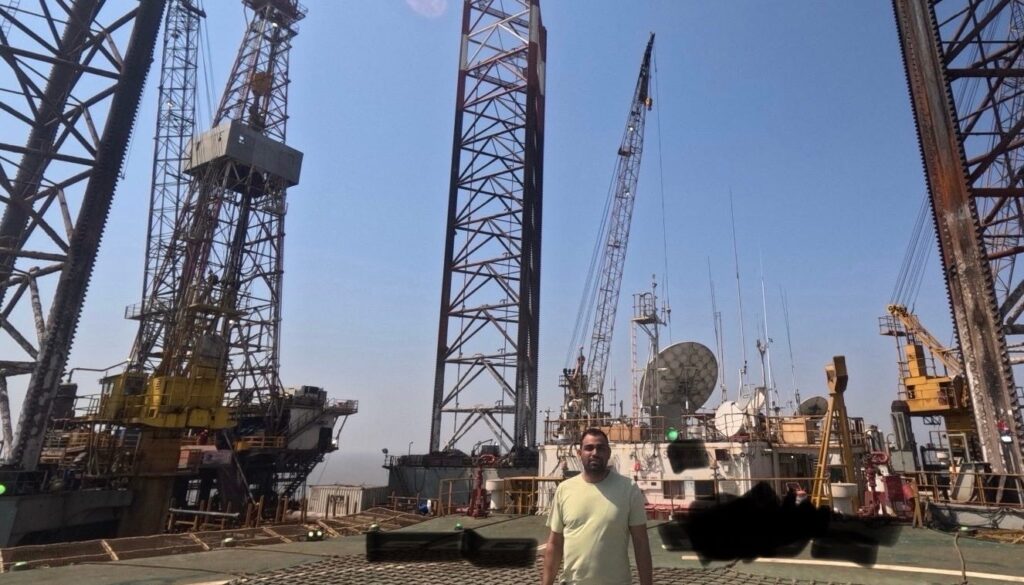
A jack up rig sits on three or four legs punched into the seabed, hull jacked clear of
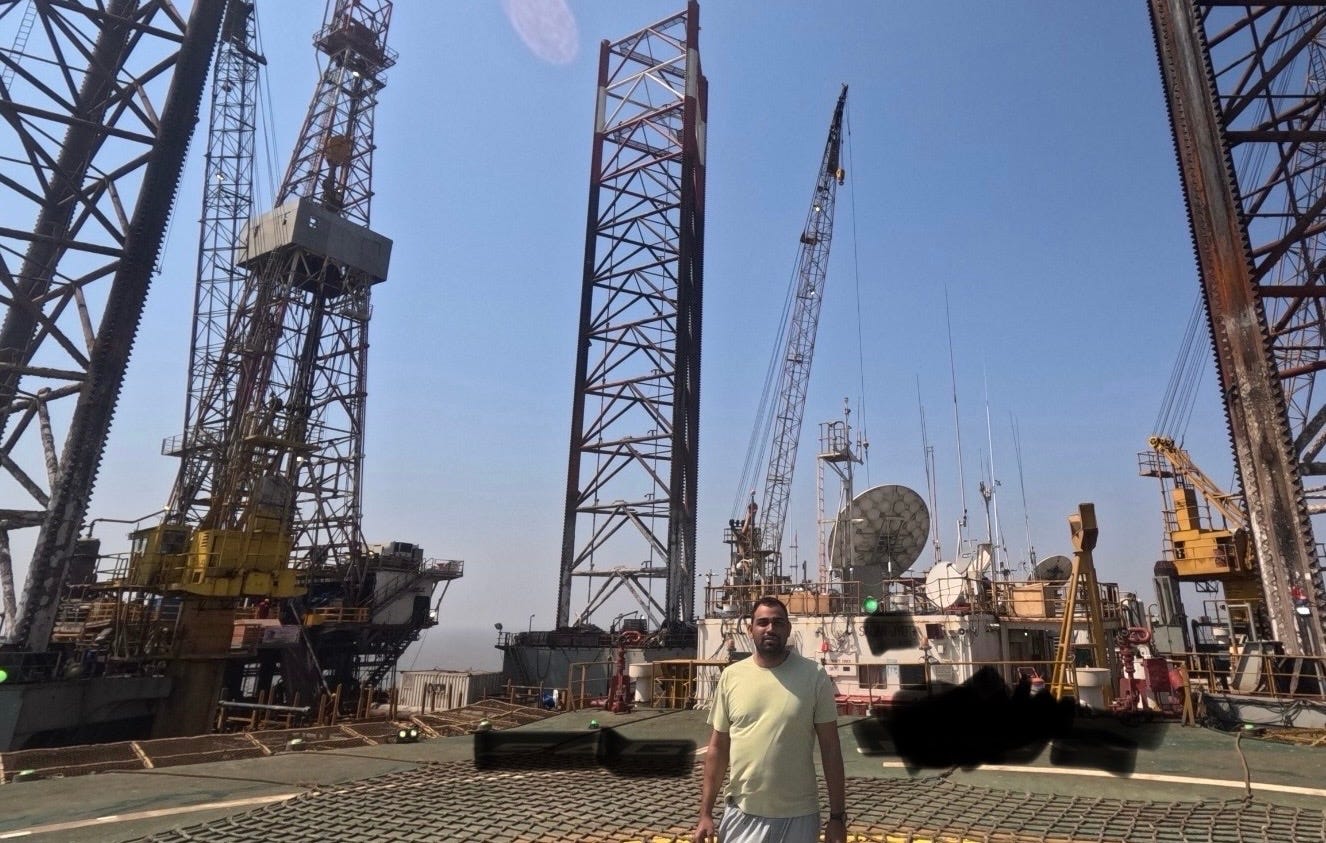
the water, drilling into rock that has waited a hundred million years for a drill bit. The rig itself waits too. Some of the units working India’s shelf today were built when Indira Gandhi was Prime Minister. The steel is fine. The paperwork is the problem.
That paperwork question just turned into a tender question, then a policy question, then a question about how to keep rigs on contract? This is issue one of a new Crude Truth series on contracts and tenders. Start here.
Two codes, one rig type
The IMO regulates mobile offshore drilling units through three successive codes. The 1979 MODU Code came first. The 1989 Code superseded it, tightening fire safety and life saving appliance standards after a string of offshore disasters through the 1980s. The 2009 Code came after Piper Alpha’s lessons had fully worked through the system and after Macondo forced another round of scrutiny.
A rig’s code is fixed by its construction date, not its current condition. A jack up laid down in 1981 carries 1979 Code DNA for life unless someone pays to upgrade specific systems and gets that upgrade certified. Age and code are correlated but not identical. A 1979 Code rig can be immaculately maintained and still fail a tender’s technical qualification purely on paperwork.
India’s regulator, the Directorate General of Shipping (now folding into the Directorate General of Maritime Administration), issued DGS Order 20 of 2022 requiring MODUs in Indian waters to hold certification under 1989 or 2009 MODU Code, with 1979 Code rigs given two years to upgrade. That two year window collided immediately with reality. India’s offshore rig market did not have enough 1989 Code tonnage to replace what was already working. ONGC, the single largest tenant of jack up capacity in Indian waters, needed relief. It got some in 2023, and more in July 2026.
The rigs actually working India’s shelf
Look at the fleet ONGC leans on and the split becomes concrete rather than abstract.
Jindal Drilling’s Jindal Star, Jindal Explorer and Jindal Pioneer were all delivered between late 2013 and early 2015, built new at Lamprell’s Hamriyah yard and Keppel FELS in Singapore. These are 1989 or 2009 Code rigs by construction date, no upgrade required, no paperwork exposure.
Jindal Supreme tells the other half of the story. Built in 1975 at LeTourneau’s Vicksburg yard, it received a life enhancement in 2006 that extended structural service life but did not, by itself, rewrite its code classification. A rig like this is exactly what DGS Order 20 was written to catch.
Aban Offshore’s fleet carries the same pattern at greater scale. Aban II, working ONGC contracts as recently as 2015 at 34 years old, began life as the Griffin Alexander III, built in 1981 in the US. Aban V, VI and VII were built in 1982, 1975 and 1973 respectively. None of that is a knock on the hardware. A well maintained jack up can run indefinitely; drilling contractors have said so on record for two decades. It is a knock on which code year sits printed on the safety certificate.
This is the shape of ONGC’s charter hire problem. A meaningful share of the tonnage historically available to India, the tonnage contractors like Aban and the older half of Jindal’s fleet represent, sits on the wrong side of a line drawn by paperwork rather than physics.
The tender that forced the question
ZW3AC26003, ONGC’s 2026 tender for charter hiring of two or more MLT or BMC jack up rigs over a three year term, went through technical evaluation earlier this year. The wider pattern around it matters more than any single line item. ONGC has cancelled or re floated jack up tenders repeatedly through 2025 and 2026, wrestling with limited bidder participation and pricing behaviour that didn’t clear the bar it needed. A market this tight does not reward being picky about a rig’s birth certificate if the steel underneath is sound.
Into that tightness, DG Shipping’s Addendum 3 to DGS Order 20 of 2022 landed on 20 July 2026. The addendum is explicit about its own trigger. It cites ONGC’s representations, the uncertain global energy scenario, and the need for uninterrupted access to offshore drilling assets at scale. Two changes followed. The compliance timeline for Chapter 9 fire safety and Chapter 10 life saving appliances of the 1989 Code was extended to 31 December 2030. And existing 1979 Code MODUs currently working in Indian waters, already mid way through their upgrade plan, can be rehired through a fresh tendering process and awarded work orders through 31 December 2029.
Read the qualifier again: currently employed in Indian waters, undergoing the upgrade as per the DGS Order. That is not a blanket amnesty for any 1979 Code rig anywhere on the planet. It is a bridge built specifically for the existing domestic fleet already mid upgrade, not an open door for a stranded rig sitting idle off West Africa to sail in on a technicality.
What the upgrade actually costs
This is where the trail runs cold on hard numbers, and it should be said plainly rather than papered over. No public source gives a clean, current dollar figure for taking a 1979 Code jack up to 1989 Code compliance in India. What is publicly known is the scope, not the invoice. The 1989 Code rewrote fire safety and life saving appliance standards, added structural and jacking system provisions, and tightened means of escape and helideck criteria relative to 1979. A special periodical survey on an aging jack up, the class inspection cycle that would run in parallel with any code upgrade, is itself a seven figure dollar exercise once drydocking, steel renewal and system recertification are included, and that is before the specific 1989 Code line items are layered on top. Anyone quoting a precise crore or dollar figure for this upgrade without a shipyard scope of work behind it is guessing. Treat any number you see elsewhere with the same suspicion this newsletter applies to its own drafts.
Why DGS is not bluffing on this
The instinct on a trading desk is to read any regulatory deadline as theatre, something that gets pushed every time it’s inconvenient. That instinct is wrong here, and the addendum’s own language explains why. DGS moved the compliance date, twice now, but never touched the underlying requirement that a MODU eventually reach 1989 Code or better. The relief is about timing, not standards.
The reason is straightforward and does not need dressing up. Fire safety and life saving appliance standards exist because people died before 1989 forced the rewrite. A drilling rig is an industrial fire risk sitting on legs in open water, with the nearest hospital a helicopter ride away. International insurers, reinsurers and P&I clubs price risk against code compliance because it is one of the few objective, auditable proxies for how a rig will behave in an emergency. A regulator that waived the requirement outright rather than phasing the deadline would be trading a domestic supply problem for a domestic safety problem, (likely raising the insurance costs among other things) and DGS chose not to make that trade.
The commercial angle
For a rig owner sitting on an older, amortised jack up, this addendum is worth real money. A 1979 Code rig with cheap remaining book value that qualifies for one more three year Indian charter under the bridge provision gets to earn against a nearly fully depreciated asset base, the best economics a drilling contractor can generate. For ONGC, it converts a hard supply constraint into a softer one for four more years, buying time for newer tonnage to enter the market or for existing rigs to complete their upgrade cycle on a schedule that doesn’t force an emergency scramble.
For a bidder evaluating whether to throw an older MODU into a tender like ZW3AC26003, the addendum changes the answer from an automatic no to a conditional maybe. The condition is narrow. The rig has to already be working in Indian waters, already be mid upgrade, and be prepared to hit the 2029 and 2030 deadlines for real. That is a small, specific population of rigs, not the whole aging global jack up fleet suddenly eligible for an Indian second life.
The inversion
A rig’s hull does not care what year IMO wrote its rulebook. A regulator’s rulebook does not care how well a hull has been maintained. Somewhere between those two indifferences sits the actual decision that determines whether a jack up drills another well in Indian waters or gets towed to a scrapyard, and for the next four years that decision runs through a calendar, not a class certificate.