Rig Move Cost in Malaysia
On July 7, 2026, Velesto’s NAGA 8 jackup came off contract in Indonesia, released
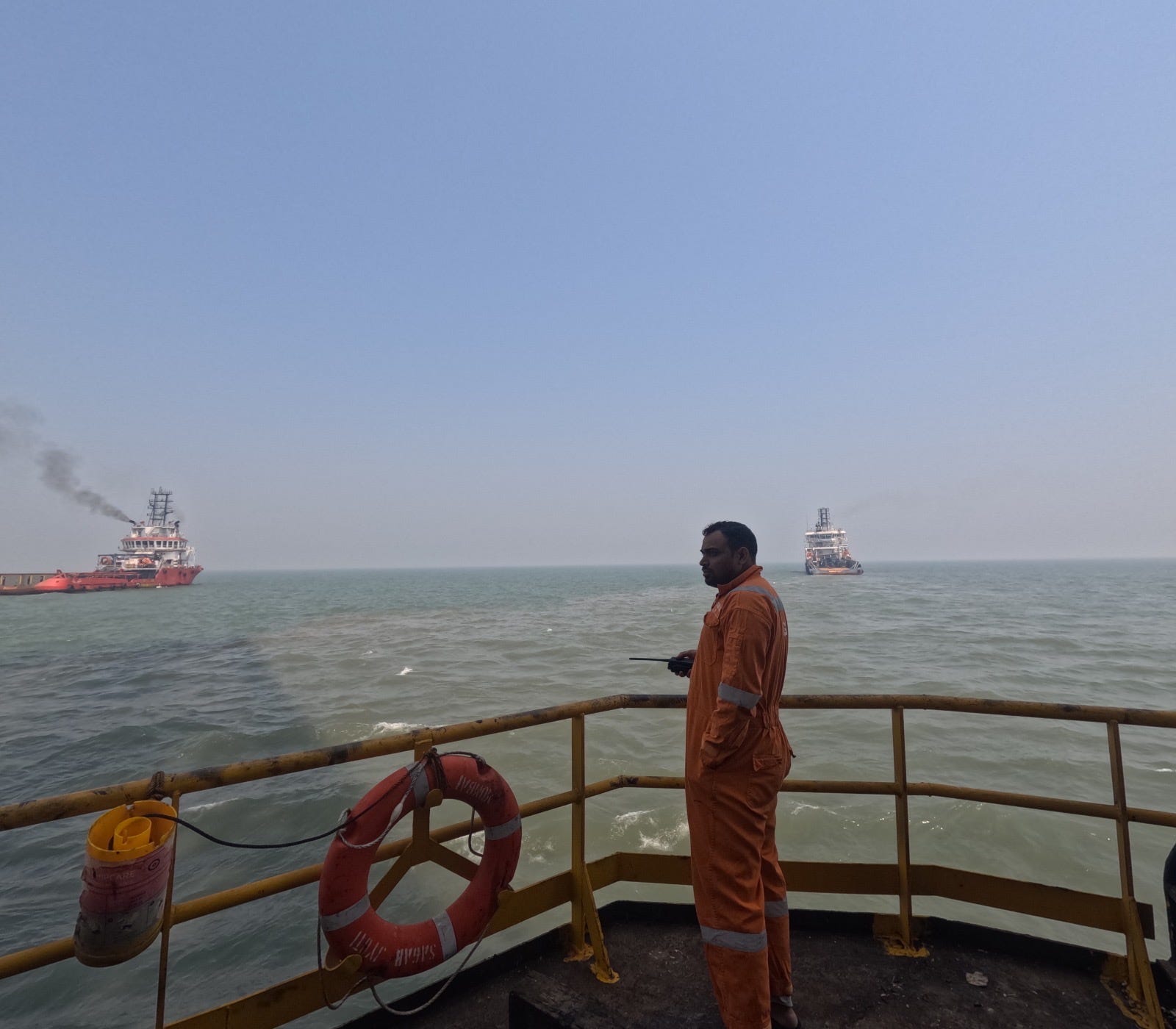
without cause after completing three of twelve committed wells. By August it was drilling again, this time in Malaysia’s North Malay Basin under a $51M contract with Chevron, a Production Arrangement Contractor of Petronas. One rig, two countries, inside a single month. In the Middle East, a move like that takes half a year of planning, a marine warranty survey, and tens of millions of dollars before the bit ever touches rock. In Southeast Asia, it barely makes the trade press.
That gap is the whole story this issue.
The number that is missing, and why that matters
I have to be straight about something before going further. Bursa Malaysia filings, where Velesto discloses every contract, report total contract value only. The $51M Chevron award, the earlier $265M three rig extension with Petronas Carigali, the $16.49M infill job with Jadestone, none of them break out a mobilization fee as a separate line the way Aramco’s contractors or Borr Drilling’s SEC filings do. There is no clean public number for what Velesto charges to move a rig from one Southeast Asian country to another. I am not going to manufacture one. The absence of that number is itself the finding, and I will explain why in a moment.
What the region actually looks like
Velesto runs six wholly owned jackup rigs across Malaysia, Indonesia, Vietnam, the Philippines, and Thailand. Marketed utilization sits at 93% regionally and 91% globally, which tells you this fleet is not idle between jobs, it is in constant rotation. NAGA 2 worked offshore Thailand for Northern Gulf Petroleum earlier this year before returning to a Petronas contract running into 2026. NAGA 4 picked up a 40 well contract in Vietnam. NAGA 8 has now touched Indonesia and Malaysia inside the same year. This is a fleet that treats borders the way a trucking company treats state lines.
Compare that to the Gulf, where Issue 90 walked through a rig move costing tens of millions of dollars in lump sum mobilization fees alone, before route survey, marine warranty approval, tow charter, and weather standby are even added. Aramco’s Increment Program is pulling rigs into the region from elsewhere in the world precisely because moving a jackup across an ocean is a capital event, not a routine reassignment.
Why the distance actually drives the cost
Southeast Asia’s jackup fleet operates in a tight geographic cluster. Malaysia’s Peninsular waters, Indonesia’s shallow basins, and the Gulf of Thailand sit within days of tow time from one another, not weeks. The North Malay Basin, where NAGA 8 is now working, borders the Gulf of Thailand directly. A rig redeploying from Indonesia to Malaysia is closer to a coastal relocation than an international mobilization. That is the actual mechanism behind why Bursa filings never separate out a mob fee. When the tow is measured in days rather than weeks, when the water depth and soil conditions across the basin are broadly similar, and when the regulatory regime under Petronas covers most of the operators in play, the mobilization cost shrinks enough that it stops being worth itemizing separately in a public filing. It gets folded into the day rate instead.
That is the real lesson underneath the missing number. In the Gulf, mobilization cost is large enough that it becomes its own negotiated instrument, the way Borr Drilling invoiced roughly $48M in lump sum mobilization revenue from two rigs alone. In Southeast Asia, proximity has compressed that same cost down to something small enough to disappear into the total contract figure. The size of the number in a filing tells you as much about geography as it does about the deal itself.
Stress test
Take NAGA 8’s actual year. Terminated in Indonesia July 7. Contracted in Malaysia by August. If that gap had involved a Gulf scale mobilization, the rig would likely still be sitting in a yard waiting on class approval and a tow slot. Instead Velesto is actively marketing the rig for alternative deployment within days of a termination, language you would never see from a Gulf operator managing a rig that just came off an Aramco contract. Speed of redeployment is itself a form of capital efficiency, and it only exists because the mobilization cost is low enough to make fast redeployment rational.
Close
Everyone assumes a rig move is a rig move, priced the same everywhere a jackup floats. It is not. In the Gulf, distance and scale turn mobilization into a line item large enough to swing a quarterly filing. In Southeast Asia, proximity turns the same event into something so routine it never gets a number of its own. The absence of a disclosed mobilization fee in Velesto’s filings is not a gap in the data. It is the data. Geography set the price long before any surveyor signed a tow plan.