ONGC Q1 Results: Who is actually funding Samudra Manthan
ONGC reported standalone net profit of ₹17,034 crore for Q1 FY27, up 112.3% from
₹8,024 crore a year earlier, on gross revenue of ₹46,460 crore, up 45.2%. Profit before tax hit ₹22,848 crore, the highest quarterly PBT in the company’s history. The driver was straightforward, net realisation on nominated crude oil rose 50.4% to $99.45 a barrel from $66.13 a year earlier, ₹9,419 a barrel in rupee terms, a 66.5% jump, as the West Asia crisis this project has already tracked through several issues pushed crude prices sharply higher through the quarter. Production stayed essentially flat, crude oil at 4.452 million tonnes, natural gas at 4.756 billion cubic metres, meaning this was a price driven quarter, not a volume driven one, and that distinction matters for everything that follows.
New Well Gas, gas priced under the newer market linked framework rather than the older Administered Price Mechanism, contributed ₹3,998 crore in revenue during the quarter, generating ₹1,897 crore more than the same volume would have earned at the APM price, and now accounts for roughly 38% of total revenue from ONGC’s nomination gas portfolio. This is worth understanding as its own mechanism. New Well Gas pricing applies to gas from wells that started production after a specified cutoff, priced with reference to international benchmarks subject to a ceiling, rather than the fixed, government set APM rate that still applies to gas from older wells. As ONGC brings new fields online, including the deepwater wells now being drilled under Samudra Manthan, a growing share of its gas output shifts into this higher realising category automatically, independent of any single quarter’s crude price cycle.
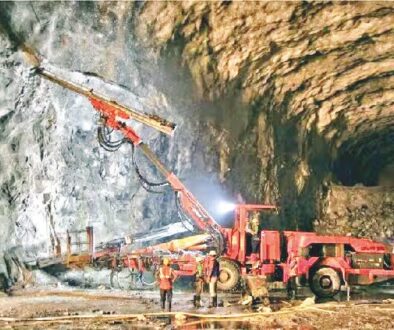
Two hydrocarbon discoveries were reported for the quarter, one offshore prospect and one onshore new pool. ONGC also confirmed it is implementing more than ₹40,000 crore of capital projects in the Western Offshore, including the Daman Upside Development Project, TSP and Discovered Small Fields work, with benefits expected to materialise progressively from FY28 as these projects add production the company’s own guidance says current quarters are not yet capturing. Separately, and directly continuing the thread this project covered in the Samudra Manthan issue, ONGC confirmed it spudded its first deepwater exploratory well under the scheme, in the Mahanadi basin, on July 25, 2026, at a water depth of roughly 765 metres.
At the consolidated level, the picture is more mixed, and worth stating plainly rather than folding into the standalone headline. Consolidated gross revenue rose 25.7% to ₹2,04,987 crore, but consolidated profit after tax fell 43.3% to ₹6,554 crore, dragged down by a consolidated net loss of ₹12,265 crore at HPCL, the downstream subsidiary, driven by under-recoveries on petroleum products as retail prices lagged the same crude spike that lifted ONGC’s own upstream numbers. This is the same structural tension this project detailed in the IOCL value chain issue, an upstream producer and a downstream marketer sitting inside the same corporate family, one side benefiting from a crude spike the other side absorbs as a loss.
What This Quarter Actually Sent To The Exchequer
Profit before tax of ₹22,848 crore against net profit of ₹17,034 crore means ONGC’s own disclosed figures put its standalone corporate tax outgo for the quarter at ₹5,814 crore, a number derived directly from the two disclosed figures rather than estimated. This sits on top of statutory levies, royalty and cess on crude oil and natural gas production, which ONGC discloses separately and which are not yet broken out in the same detail for this specific quarter at the time of writing. The most recent comparable disclosed figure, for Q3 FY26, put statutory levies at ₹5,975 crore for that quarter, down from ₹6,630 crore a year earlier, and this project would rather flag that as a reference point for the general scale of this line item than present it as this quarter’s actual figure, since royalty policy itself moved twice in recent months, a rate cut in May 2026 that lowered onshore crude royalty from 16.66% to 10% and offshore crude royalty from 9.09% to 8%, followed by a partial reversal reported in June 2026 that pushed the effective royalty rate back up for FY27, a moving target this project will only report precisely once ONGC’s own quarterly filing states the figure directly.
Even holding to only the two numbers this quarter’s disclosure actually confirms, ₹5,814 crore in corporate tax, and treating the roughly ₹6,000 crore quarterly statutory levy run rate as an illustrative reference rather than a confirmed Q1 FY27 figure, ONGC’s combined tax and levy contribution for a single quarter runs somewhere in the range of ₹11,000 crore to ₹12,000 crore, before counting dividends. The Government of India holds 58.9% of ONGC directly, meaning the majority of whatever dividend the board eventually declares against this quarter’s profit flows straight back to the same exchequer, on top of the tax and levy figures above.
Set Against Samudra Manthan
Samudra Manthan’s Phase I outlay is ₹84,084 crore, disbursed over roughly five years, from the July 2026 Cabinet approval through FY 2030-31, this project detailed the full breakdown in its own issue. Run even the conservative, illustrative version of ONGC’s quarterly exchequer arithmetic above, roughly ₹11,000 crore to ₹12,000 crore a quarter in tax and statutory levies alone, out to an annual run rate, and a single year of ONGC’s own contribution to the exchequer through these two channels alone runs close to half the entire five year Samudra Manthan outlay. Over the scheme’s full disbursement window, even before counting dividends, ONGC’s own tax and levy contribution to the exchequer would need to fall dramatically from this quarter’s level to end up smaller than the ₹84,084 crore the government is now committing back into offshore exploration. This is not a criticism of the scheme’s scale, which this project’s own prior issue treated as a genuine, carefully structured commitment. It is a scale marker worth having in view, the company generating a meaningful share of the exchequer resources that make a programme like Samudra Manthan fiscally possible in the first place is also the company now drilling its first wells under it, a fact easy to lose inside a headline number that only ever gets repeated as ₹84,084 crore committed, never as what already flows the other way.
Sources: ONGC Q1 FY27 stock exchange filing and results announcement, August 4, 2026, as reported by ANI, Business Standard, and NewKerala. Business Standard reporting on ONGC Q3 FY26 statutory levies, February 2026. Business Standard and Whalesbook reporting on the May 2026 royalty rate reduction and the subsequent June 2026 effective rate reversal for FY27. Screener.in company disclosure summary on ONGC ownership structure. Petroleum Planning and Analysis Cell, Government of India, Contribution to Central and State Exchequer disclosure page.