What a well costs in the Gulf of Mexico, phase by phase
A drillship holds station 200 miles off Louisiana in 6,000 ft of water, dynamic
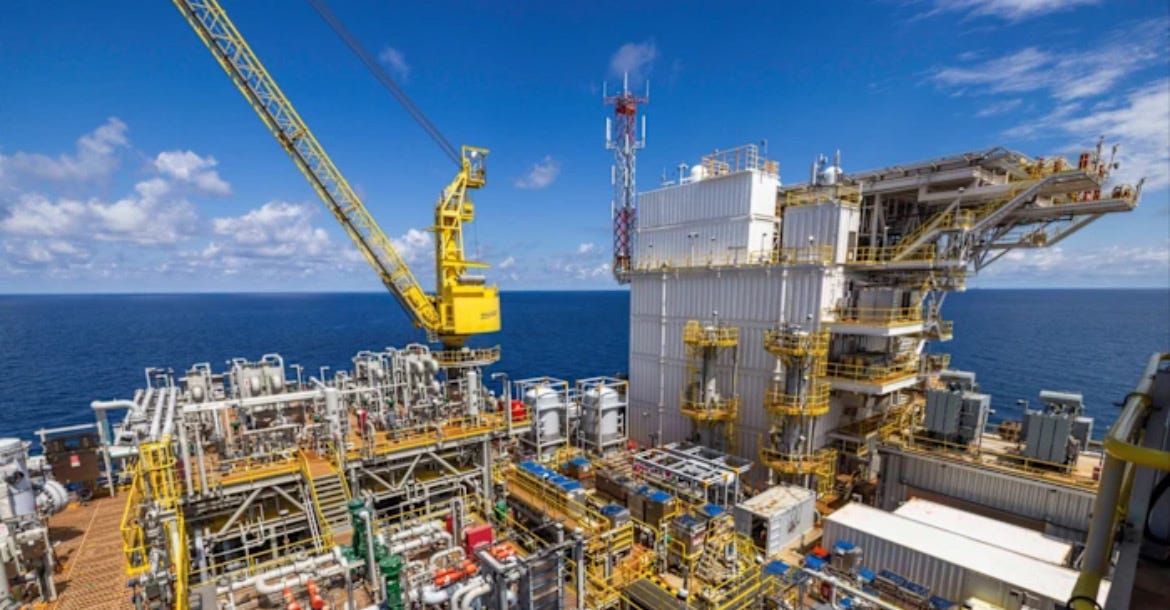
positioning thrusters firing in tiny corrections nobody on deck even notices anymore. A crew change chopper is thirty minutes out. A PSV is inbound with mud and casing. None of that logistics chain exists onshore, and none of it exists at Mumbai High either, where the rig at least sits jacked into the seabed instead of floating free above 6,000 ft of open water. This issue prices out what that difference actually costs, phase by phase, same discipline as the Permian and Western Offshore issues before it.
Every figure below is drawn from public sources, cited at the end. Where a number is dated or the range is wide, that is stated directly.
Phase one, geology and seismic
Offshore 3D seismic runs far above onshore cost. Public references put offshore 3D survey cost at $10K-$50K per square km for standard coverage, with total programs commonly running $10M-$50M for a 500-1,000 sq km block area. Seismic vessel day rates alone run $100K-$300K/day. A deepwater block the size of a single BOEM lease tract can require its own dedicated survey before a single exploration well is ever drilled, and that cost sits entirely outside any well level AFE.
Phase two, leasing
Federal Gulf leases are sold at BOEM auction, and the swing in results block to block is extreme. A standard OCS block runs roughly 5,760 acres. In a strong sale, ConocoPhillips paid $30.58M for a single Alaminos Canyon block, near $5,300/acre. In a weak one, the March 2026 BBG2 sale drew just $47M in total high bids across 25 blocks and roughly 141,000 acres, an 84% drop from the $300.4M generated by the prior sale four months earlier. That kind of swing, an 84% collapse in bid activity between two sales in the same 12 month window, is a leasing risk that has no real equivalent onshore, where acreage prices move but rarely by that order of magnitude sale to sale.
Phase three, drilling
This is the single largest line item, same structural pattern as Western Offshore but at a different scale entirely. Ultra-deepwater drillship day rates have averaged $496,333/day over the past 12 months as of mid-2026, with 20K psi capable rigs commanding up to $650K/day for wells requiring that pressure rating. A single exploration well drilled to 20,000-32,000 ft can take 70-150 days depending on depth per older but structurally still-relevant industry estimates, meaning drilling cost alone on one deepwater well can run into the tens of millions of dollars before a single subsea tree is installed.
Phase four, subsea infrastructure
Trees, manifolds, umbilicals, and flowlines connect the wellbore to the host facility, and this is where deepwater fundamentally diverges from either onshore or shallow water. A subsea tieback flowline was estimated at roughly $7.2M per mile in 1999 dollars, a figure that is dated and should be read as a floor, not a current benchmark, but the underlying economics still hold. Subsea tiebacks have become the dominant development model in the Gulf specifically because they are cheaper and faster than standalone facilities. At least 8 new tiebacks are scheduled for installation in 2025-2026, connecting smaller discoveries to existing host platforms rather than building new infrastructure from scratch.
Phase five, the host facility
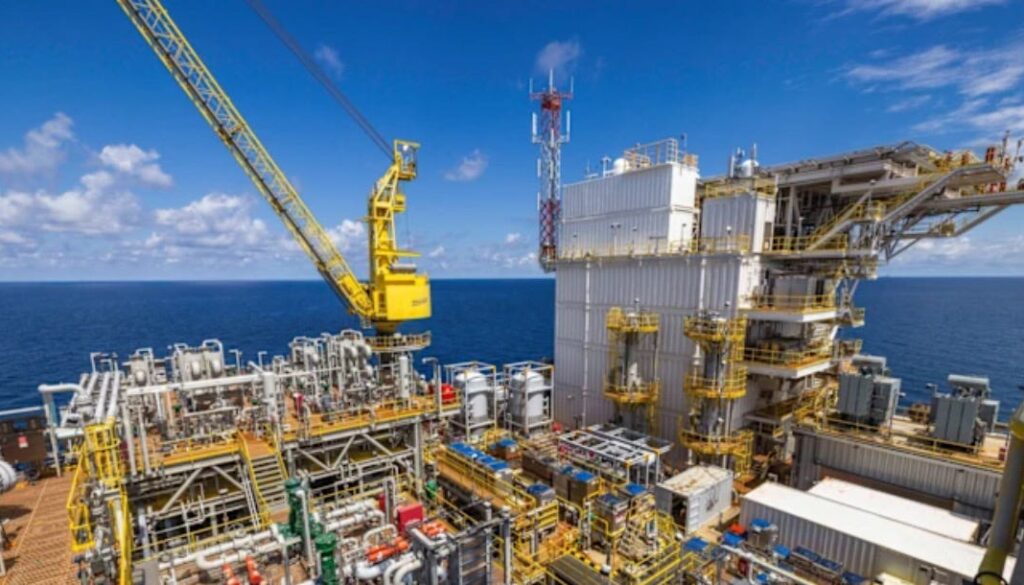
If a discovery is large enough to need its own floating production unit rather than a tieback slot, this phase dwarfs everything else. Historical example, Shell’s Auger tension leg platform cost $1.2B to develop, with roughly 65% of that spent on fabricating and installing the hull, deck, facilities, and drilling rig, and the remaining 35% on drilling and completing the wells themselves. A full example deepwater project lifecycle, per a NOIA industry study, runs to $8.8B in total lifetime spending, with average annual spend near $295M/yr concentrated heaviest during the subsea tieback development phase and again during decommissioning.
Phase six, ongoing logistics
Unlike a one time cost, this phase runs for the life of the field. Large DP-2 platform supply vessels command $45K-$55K/day in the current US Gulf market, up from lows near $7K/day during the 2018 downturn, a nearly eightfold swing across a single commodity cycle. Add helicopter crew change costs on top and a deepwater host facility carries a permanent daily logistics burden that a Western Offshore jackup, tied to a fixed platform reachable by a shorter supply run, does not carry at the same intensity.
Phase seven, decommissioning
This is the phase most operators underweight until the bill arrives, and the public data on it is unusually granular. Average decommissioning cost per fixed platform runs $46M, with well plugging and structure removal making up about 80% of that at roughly $19M and $18M respectively. Floating structures cost more, spars average $55M to decommission, semisubmersibles average $40M, and tension leg platforms and their smaller mini versions run $18M-$25M apiece. The full US deepwater decommissioning market has been valued at approximately $24.3B.
The insight veterans keep underweighting
Here is the number that should genuinely surprise anyone who has not gone looking for it. Plug and abandonment cost for subsea, wet tree wells has been estimated at $650M across roughly 100 wells, close to $6.5M per well. Dry tree wells on fixed platforms, plugged using rigless techniques and casing jacks straight from the platform deck, were estimated at $339M across 466 wellbores, roughly $728K per well. That is close to a ninefold cost difference per well between a dry tree completion and a subsea completion, and it exists purely because abandoning a subsea well requires mobilising a MODU, the same drillship economics as phase three, all over again, while a dry tree well never needs a rig to come back at all.
This means the tieback boom driving down capex in phase four and phase five today is quietly loading a heavier abandonment liability onto the balance sheet for a decade or two out. Every operator celebrating a cost efficient subsea tieback is also signing up for a wet tree P&A bill nine times larger per well than they would have paid on a platform. Almost nobody prices that trade explicitly at the sanction stage, because the cost lands in a different decade than the one the FID committee is looking at.
Stress test
Run a Gulf of Mexico project through three shocks and watch which phase breaks first.
A rig market tightening around 20K psi pressure control capability, the exact pattern already visible in day rates moving from $496K to $650K for the highest spec drillships, turns phase three into the swing variable on any HPHT prospect, the same way rig market timing swings Western Offshore economics.
A weak lease sale cycle, the 84% collapse between BBG1 and BBG2 within four months, shows phase two carries far more year to year volatility than any onshore land market, which means acreage timing is close to pure luck compared to a Permian operator’s ability to negotiate a known per-acre range.
A subsea tieback boom that keeps favouring capex efficiency over dry tree architecture pushes phase seven’s liability further out and larger, exactly the mechanism described above, until a wave of decommissioning bills arrives across the same aging wet tree inventory all at once, which is close to the situation BSEE’s own $24.3B market estimate is already describing.
The inversion
Onshore, the swing phase is completion, how much sand and water you pump. Offshore in shallow water, the swing phase is the rig itself, that 75%-80% cost weighting sitting on the surface for everyone to see. In the Gulf of Mexico deepwater, the swing decision is invisible at sanction and only visible decades later, standalone platform or subsea tieback, dry tree or wet tree, a choice that looks like a capex optimisation today and reveals itself as a liability multiplier only when the field is ready to die.
Sources
Offshore 3D seismic survey cost ranges, JOUAV seismic survey guide. BOEM Western Gulf and Big Beautiful Gulf lease sale results, BOEM press releases and Oil & Gas Journal, 2025-2026. Ultra-deepwater drillship day rates, S&P Global Commodity Insights year review of the US Gulf of Mexico floater market. Deepwater drilling duration by depth, ScienceDirect Topics drilling cost overview. Subsea tieback flowline cost, A Review of Deepwater Pipeline Construction in the US Gulf of Mexico. Subsea tieback installation activity 2025-2026, Offshore Magazine. Auger TLP development cost and cost split, deepwater pipeline construction review. Example deepwater project lifecycle spending, NOIA, The Gulf of Mexico Oil & Gas Project Lifecycle. Platform supply vessel day rates, S&P Global OSV labor cost analysis and WorkBoat reporting. Decommissioning cost by structure type and subsea versus dry tree plug and abandonment cost, Offshore Magazine and ScienceDirect, Center for Energy Studies, Louisiana State University decommissioning cost series.