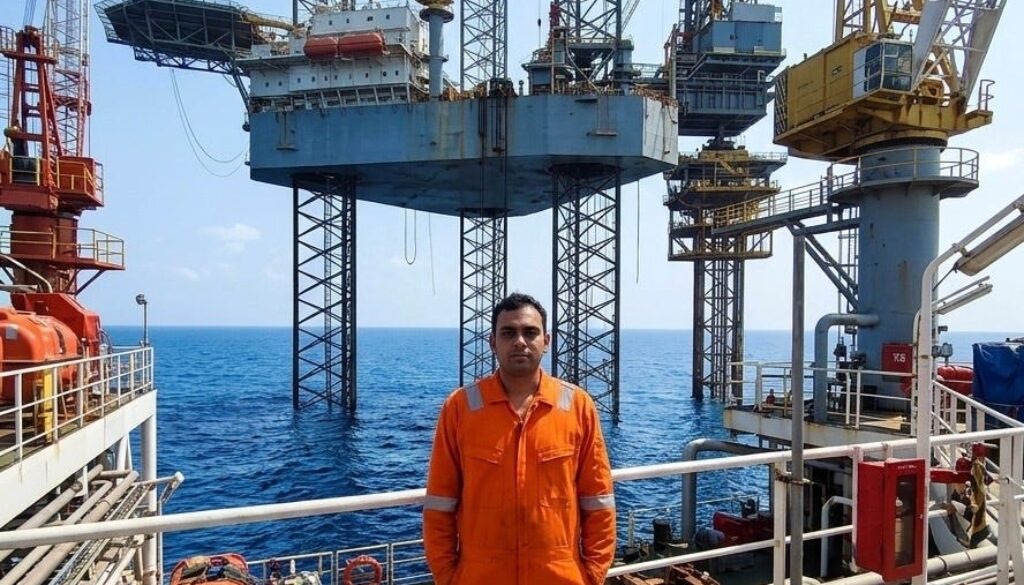
ADES: The Jackup Shah en Shah
In March 2026, ADES Holding suspended offshore rig operations for a portion of its
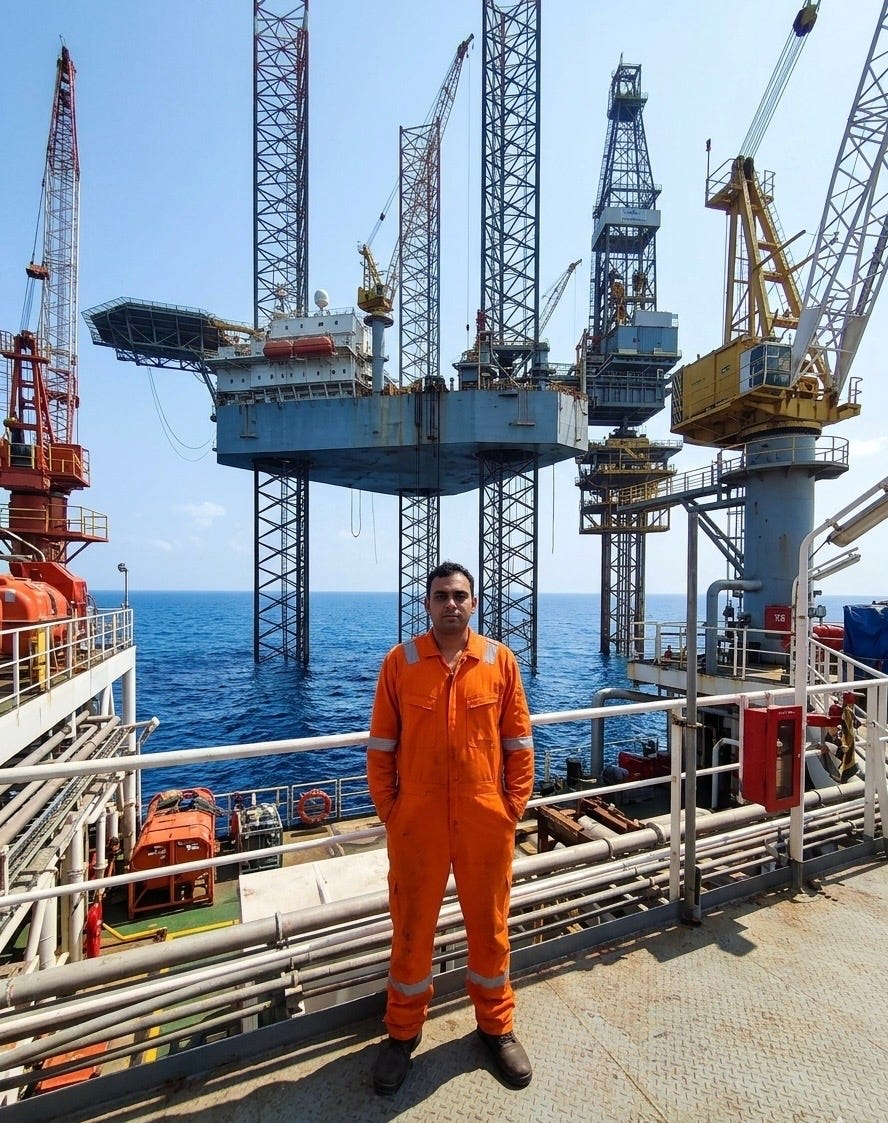
thirty three Gulf based units, a direct precaution against the regional conflict spreading across the Middle East, the same Iran war this project has already traced back to a February 28, 2026 start date in the Issue 66 political timeline piece. Two months later, the company reiterated full year EBITDA guidance of four point five to four point eight seven billion Saudi riyals, thirty three to forty four percent growth over 2025. A company that just took some of its own rigs offline for safety reasons raised no red flags about hitting a growth target most drilling contractors would consider aggressive in peacetime. The reason is not resilience in the abstract. It is a fleet that, eighteen months ago, did not exist in its current form.
ADES was a private, PIF backed regional driller as recently as 2021, when Saudi Arabia’s Public Investment Fund teamed up with Zamil Group Investment and ADES Investments to take the then London listed company private in a deal valuing it at roughly five hundred sixteen million dollars. Two years later, in September 2023, the same PIF backed vehicle brought ADES public again on the Saudi exchange, an initial public offering priced at the top of its range, thirteen point five riyals a share, valuing the company at fifteen point two billion riyals, four point zero six billion dollars, drawing institutional orders of seventy six point five billion dollars for a one point two billion dollar offering, sixty three times oversubscribed. The stock closed its first day up thirty percent, the maximum move Saudi exchange rules allow. A company the state valued at five hundred sixteen million dollars in 2021 was worth eight times that within twenty four months, without changing its underlying strategy at all, buy oil field service capacity across the Middle East and North Africa faster than competitors can defend their own share of it.
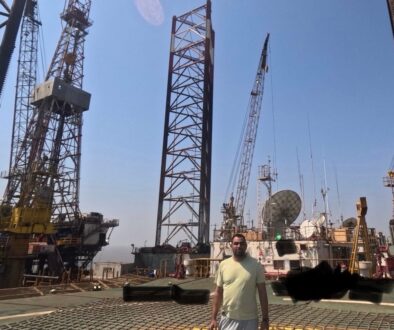
The strategy did not stop at the IPO. In August 2025, ADES agreed to acquire Shelf Drilling, a much larger international rig owner, in an all cash merger, revising its offer upward twenty eight percent to eighteen point five Norwegian kroner a share after pushback from Shelf Drilling’s own management, and closing the deal in November 2025. The combined company operates more than eighty offshore jackups, over forty five of them premium units, forty onshore rigs, across nineteen countries, up from thirteen before the merger, backed by a combined backlog exceeding nine billion dollars. ADES’s own guidance for fifty to sixty million dollars in annual cost synergies, plus more than thirty million dollars a year in day one interest savings from refinancing Shelf Drilling’s more expensive debt, is the arithmetic behind why a fleet that suddenly spans West Africa, the North Sea, and Southeast Asia can absorb a regional conflict in its home market without losing its growth guidance. A rig idled in the Gulf is a problem for a purely Gulf focused driller. It is a rounding error for a company that just added Nigeria, the Dutch sector of the North Sea, and Chevron’s Nigerian operations to its client list in the same eighteen months.
Understand what ADES actually operates, because the fleet is not just interchangeable jackup rigs. A meaningful share of the combined fleet are Mobile Offshore Production Units, MOPUs, platforms that do not drill at all but instead process oil and gas at the surface after a well is already flowing, functioning as a floating production facility a client leases rather than owns outright, distinct from the drilling and workover rigs that make up the rest of the business. Onshore, ADES runs both drilling rigs, which bore new wells, and workover rigs, smaller units that re enter existing wells to repair or stimulate them rather than drill new holes, a lower day rate but steadier revenue business that cushions the swings in offshore drilling demand. This dual exposure, drilling revenue that moves with exploration budgets and production or workover revenue that moves with keeping existing wells flowing, is the specific reason ADES’s own management can describe the company as naturally diversified even before counting the new geography Shelf Drilling brought in.
Here is the stress test. Ninety five percent of ADES’s original backlog, before the Shelf Drilling deal, traced back to three clients, Aramco, Kuwait Oil Company, and Qatar’s North Oil Company, all of them Gulf state entities exposed to the same regional conflict that just forced the March 2026 rig suspensions. The Shelf Drilling acquisition dilutes that concentration on paper, nineteen countries instead of thirteen, but the company’s own first quarter 2026 disclosure was explicit that the current regional environment and related temporary suspensions are expected to weigh more heavily on the second quarter than the first, since the first quarter only absorbed a handful of disrupted days. Revenue grew twenty four percent to seven point six billion riyals in the trailing period reported, and EBIT margins held stable, real evidence the integration is working operationally. But a company still drawing the bulk of its legacy backlog from three state buyers in the exact region a war just opened in has not yet proven its diversification will hold up through a full quarter of that war, only through a few days of it.
Label for this one: ADES multiplies. Not organically. Through a state backed vehicle that took a five hundred sixteen million dollar private company and turned it into a four billion dollar public one in two years, then used the public currency to buy a rig fleet nearly as large as its own, betting that scale purchased quickly is worth more than scale grown slowly, in a region where the case for moving quickly keeps getting made for it by events outside the company’s control.
Sources: ADES Holding Company first quarter 2026 earnings release, Offshore Energy and IndexBox reporting on ADES Nigeria and North Sea contract awards April through July 2026, Oil and Gas Middle East reporting on ADES Gulf rig suspensions March 2026, Offshore Technology and OE Digital reporting on the ADES and Shelf Drilling merger August through November 2025, Bloomberg and Gulf News reporting on the ADES Holding initial public offering September and October 2023.