Trump: 6 Events, 11 Months, And A President Who Told You The Quiet Part On X
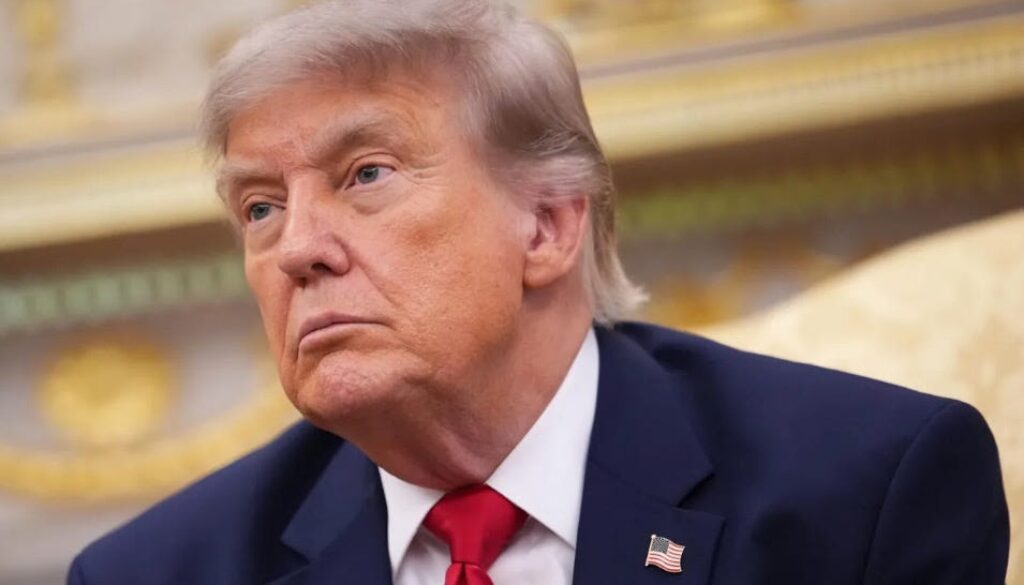
March 2026, Brent sitting near a hundred nineteen dollars a barrel, Trump posts on his own platform that America is the largest oil producer in the world by far, so when oil prices go up, the country makes a lot of money. He said it plainly, in his own words, with his own account, days after air strikes he ordered helped push the Strait of Hormuz toward closure. Nobody leaked that sentence. Nobody had to.
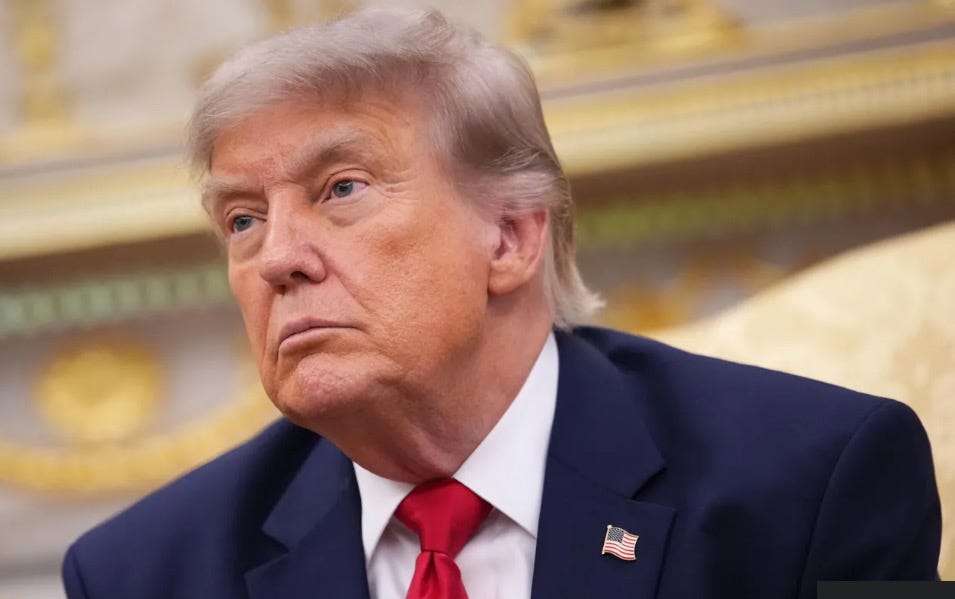
Read the sentence twice. A sitting president is publicly celebrating a price spike that was, at that exact moment, pushing gasoline past four dollars a gallon for tens of millions of his own citizens. Whatever the true sequence of intentions running through the White House during the eleven months that preceded that post, the celebration itself is not speculation. It is a timestamped public record. Everything else in this issue is an attempt to build the timeline underneath that sentence honestly, credit the pattern where the pattern earns credit, and stop short of calling a theory a verdict.
THE TIMELINE, IN THE ORDER IT ACTUALLY HAPPENED
Tariffs came first, structurally, and stayed the longest running fight. Trump’s global reciprocal tariffs, imposed through 2025 under emergency powers, drew immediate legal challenge. The Court of International Trade ruled them illegal on May 28 2025. The appeals court agreed on August 29. The administration pressed on regardless, and the fight climbed to the Supreme Court, which heard oral argument November 5.
Congress moved on Epstein in parallel. The House passed the Epstein Files Transparency Act four hundred twenty seven to one on November 18 2025, the sole dissent coming from Louisiana Republican Clay Higgins, the Senate cleared it the next day by unanimous consent, and Trump signed it later that same day without reporters present, having spent most of the year telling his own base the files mattered less than they thought. The law gave the Justice Department thirty days. The department missed its own deadline, releasing a first redacted batch December 19, drawing bipartisan criticism from the same Republicans who had just voted for the law.
January 2026 opened with United States forces capturing Maduro inside Caracas on January 3, an operation the Pentagon named Absolute Resolve, flying him to New York on narcotrafficking charges and installing his own vice president, Delcy Rodriguez, as interim leader within forty eight hours. Three weeks later, on January 30, the Justice Department released three million additional pages of Epstein material, the largest single tranche yet, containing a list of sexual assault allegations tied to Trump that the FBI had compiled from unvetted public submissions rather than substantiated findings, alongside correspondence between Epstein and figures including Larry Summers, and internal video from Epstein’s holding cell. Deputy Attorney General Todd Blanche stood in front of cameras and, pressed on whether the department had shielded the president, said there was no protecting him and no not protecting him, the release simply followed the law, a line that only gets said out loud when protecting the president is exactly what people suspect happened.
February deepened both threads at once. Congressman Ro Khanna read six newly unredacted names into the congressional record on February 10. Energy Secretary Chris Wright flew to Caracas the next day, the first cabinet level American energy visit to Venezuela in nearly three decades, confirming Washington would control the proceeds of any Venezuelan oil sales until the country stood up a government Washington recognized. Then, on February 20, the Supreme Court ruled six to three that emergency powers never authorized the tariffs in the first place, an unambiguous legal defeat delivered eight days before American and Israeli air strikes hit Iran on February 28.
Crude sat near seventy dollars the morning the strikes began. Within six weeks Brent touched a hundred twenty five to a hundred twenty six dollars, its highest level since the months after Russia invaded Ukraine, and fear of Iranian retaliation pushed the Strait of Hormuz toward closure for the traffic that normally carries a fifth of the world’s oil. That is the verified order of events. Tariffs collapsing in court. Epstein material naming the president’s own associates and detailing allegations against him directly. A foreign capture completed in the gap between the two. A war beginning eight days after the tariff ruling, delivering the administration its first genuinely positive economic headline of the year, rising oil prices, in an economy where the previous headline had been more than a hundred sixty billion dollars in tariffs the Supreme Court had just ruled the government collected without lawful authority.
THE CASE FOR THE PATTERN
Approval data gives the pattern real teeth. Trump’s overall rating had already slid from the mid forties toward the mid thirties across 2025, driven heavily by tariff backlash and the Epstein saga specifically, the one issue where his own base broke from him in measurable numbers, seventy one percent of all Americans and better than a quarter of his own MAGA coalition telling pollsters they disapproved of how his administration handled the files. A Wall Street Journal poll the same window found nearly half of registered voters believed Trump was using the presidency for personal gain beyond what other politicians do. This was not background noise. This was the worst sustained stretch of his second term, and it landed in the same weeks Maduro was captured and the tariff case reached the Supreme Court.
Then came the Trump quote itself, the one this issue opened with, publicly framing an oil shock as a financial win for the country at the precise moment that shock was also generating the first unambiguously positive economic story his administration had produced in months. Diamondback Energy, the third largest Permian operator, greenlit new drilling in May citing the war directly. Exxon and Chevron both leaned into higher Permian output. The optics practically wrote themselves, an embattled president watching his own domestic energy base start printing money exactly when he needed a headline that was not about tariffs owed back or files still being read into the congressional record.
TEXAS, WHERE THE BENEFIT ACTUALLY LANDS
Here the argument needs precision, because Crude Truth has already documented what a hundred percent price shock does inside Texas and it is not what a simple deflection story would want you to believe. Higher prices flow to three groups specifically, producers who bank the margin, royalty owners who collect on someone else’s well, and the state treasury through severance tax receipts. Wood Mackenzie’s Ed Crooks put the redistribution plainly, a lot more people get hurt by the downside of high gas prices than benefit from the upside, and the Landman line about the industry actually preferring a sixty to ninety dollar range, printing money without pinching consumers at the pump, is not folk wisdom, it is exactly what the API’s own head of policy told reporters during the war, calling the volatility itself bad for everyone regardless of direction.
Texas retail gasoline still climbed from roughly two dollars forty six a gallon before the war to near four dollars by late May, a burden every Texas driver absorbed alongside the producer windfall, and the Dallas Fed’s own survey found most large operators still anticipated no more than marginal production increases even at elevated prices, distrusting the war’s staying power enough to keep capital discipline over chasing the spike. If the goal was a clean transfer of wealth to a grateful Permian electorate, the mechanism was far messier and far more painful for ordinary Texans than the theory requires.
WHAT CUTS AGAINST THE THEORY
The single strongest piece of counter evidence is the polling itself. The war did not rescue Trump’s numbers, it accelerated their collapse. His economic approval fell to an all time low of thirty one percent as gasoline crossed four dollars nationally, and two thirds of Americans told CNN pollsters he had not gone far enough to lower prices even as his own war was the reason they were rising. A political operation clever enough to time a war for cover would not typically choose a war whose most visible domestic effect, expensive gasoline, is the single issue voters punish presidents for fastest and most reliably. Cost of living, not foreign policy, remained the number one issue driving his slide throughout the spring.
The independent momentum behind each individual event also matters. The Maduro operation followed a Caribbean military campaign against alleged narcotrafficking that had been running for many months before January, not a decision improvised in a news cycle. The tariff litigation ran its own multi year legal clock through three separate courts, on a schedule the administration did not control and fought at every stage to delay rather than accelerate. Congress, not the White House, forced the Epstein deadline through a near unanimous vote the president initially opposed. Each thread has a documented life of its own that predates any plausible use as a distraction, which does not disprove opportunistic timing so much as it complicates the idea of a single coordinated plan running underneath all four.
THE POLITICS THAT FOLLOWED
Washington’s own coalition did not hold together cleanly enough to look like a successful deflection either. Kentucky’s Thomas Massie and North Carolina’s Thom Tillis broke publicly from Trump in the same February window, Massie later losing his own primary after Trump campaigned directly against him over the Epstein vote. Marjorie Taylor Greene resigned from Congress January 5, having been branded a traitor by the president himself over the files, and has since called for his removal under the Twenty Fifth Amendment. Commerce Secretary Howard Lutnick admitted visiting Epstein’s island for a family lunch in 2012, more than a decade before he held any administration role, but the released records still handed the story another headline the White House did not need that week. None of that reads like a White House that successfully buried the story under a war headline. It reads like a White House that started a war while the story was still actively costing it members of its own party.
Caracas and Tehran each had their own domestic politics running independently of Washington’s news cycle. Rodriguez’s installation in Venezuela came with an immediate security dependence on Rwandan forces and an unresolved recognition question, Washington’s own diplomatic posture toward her government still unsettled weeks after the capture, meaning even the administration’s own apparatus had not fully committed to treating the operation as a clean win. Iran’s leadership, on the other side of the strikes, faced its own internal pressure to respond forcefully enough to satisfy hardliners while avoiding an escalation that risked regime survival, a calculation entirely outside anything happening in Washington’s domestic press cycle.
WHAT THE TAPE IS SAYING NOW
Amrita Sen told CNBC’s Squawk Box in late June that markets still underestimate how far shipping conditions in the Gulf remain from a genuine pre war normal, tankers still avoiding routes they used freely before February. Kevin Hassett, days later on the same network, called the current calm a ledge rather than a landing, arguing a coming supply wave pushes prices lower once shipping fully normalizes. China exports deflation into whatever industry it decides to scale, and oil politics works the same lever in reverse, a government that wants a price signal can manufacture scarcity the same way a government that wants relief can flood a market, and the honest reading of 2026 is that Washington has now demonstrated it is willing to use both levers within the same eleven month stretch, tariffs to raise prices on goods, a war whose ending Trump personally declared complete the moment prices needed to fall.
STRESS TEST
The available public evidence cannot establish intent one way or the other, since no White House press release will ever confirm timing a war for domestic cover, and any reader treating this issue as proof rather than pattern recognition is reading it wrong. Treat the correlation as exactly what it is, suggestive, well documented, and impossible to close the loop on without access to conversations nobody outside the Situation Room will ever see.
Recession risk sits underneath all of it regardless of motive. An oil shock layered on top of a tariff regime the Supreme Court just voided creates exactly the kind of stacked uncertainty that makes Federal Reserve policy harder to read and corporate capital spending harder to commit to, independent of whether anyone intended the stack to land this way.
Political durability cuts against the administration either way. A deflection strategy that leaves the president’s approval at record lows and costs him two committee allies in Congress is not a strategy working as designed, whatever the original intent behind any individual decision inside it.
THE INSTITUTIONAL LABEL
Plausible deniability. Six events in eleven months, four of them running on their own independent legal or military clocks, one of them ending in a presidential social media post celebrating the exact price spike that was hurting the same voters his approval rating says are angriest at him. The pattern is real. The intent behind the pattern is not provable, and Crude Truth will not pretend a correlation this clean is the same thing as a confession, even from a president who came closer than most to handing you one in writing.
SOURCES
Tax Foundation, Chatham House, White and Case, and SCOTUSblog, coverage of Learning Resources Inc. v. Trump and the February 20 2026 Supreme Court tariff ruling. Wikipedia and Britannica, Epstein Files Transparency Act timeline, November 2025 through June 2026. NPR, CNN, ABC News, and Al Jazeera, coverage of the December 19 2025 and January 30 2026 Epstein document releases. Wikipedia, ABC News, PBS News, CBS News, NBC News, Fox News, and the US Department of State, January 2026 capture of Nicolas Maduro. Economist and YouGov polling, February through May 2026. NBC News and CNN, Trump approval rating analysis, January through May 2026. CNBC, coverage of Trump and Republican fallout from tariffs and Epstein, February 13 2026. Houston Public Media, Texas Tribune, and KSAT, Texas oil industry and consumer impact of the Iran war, March 2026. Dallas Fed research, Texas employment and drilling response to the 2026 oil shock. Oil Change International, Trump statement on oil price benefits, March 2026. NPR, industry economics of high oil prices, April 2026. Fortune, Diamondback Energy drilling response, May 2026. CNBC, Amrita Sen interview, June 29 2026. CNBC via Yahoo Finance, Kevin Hassett interview, June 2026.