PDVSA Lost Its Own Refineries In An American Courtroom Three Weeks Before It Lost Its Own President
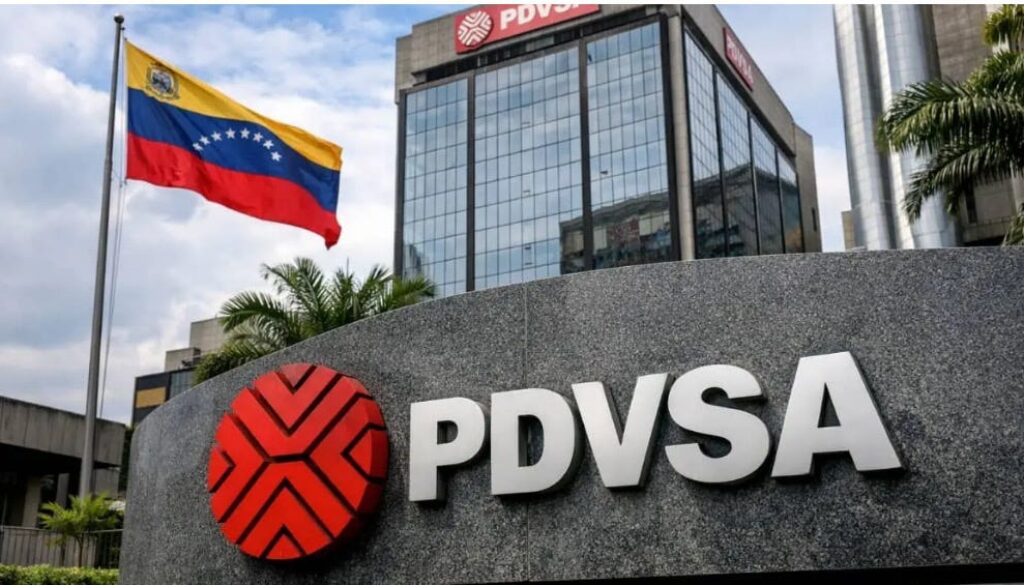
November 25 2025, Wilmington, Delaware. Judge Leonard Stark signs off on a five point nine billion dollar sale of PDV Holding, the American parent company that owns Citgo, to Amber Energy, an affiliate of Paul Singer’s Elliott Investment Management. Citgo is not a foreign asset PDVSA merely invested in. It is PDVSA’s own subsidiary, a hundred fifteen year old refining network with three plants in Louisiana, Texas, and Illinois refining eight hundred thousand barrels a day, the single most valuable thing Venezuela’s state oil company owns anywhere in the world. An American court just ordered it sold to satisfy debts Caracas has been defaulting on since 2017. Three weeks later, on January 3 2026, American forces captured the president of the country that owns PDVSA and flew him to New York to face trial. Read those two sentences back to back and the company at the center of this issue stops looking like an oil producer and starts looking like an estate being liquidated in installments, one American courtroom and one American military operation at a time.
THE COLLAPSE THAT MADE THIS POSSIBLE
Venezuela sits on the largest proven oil reserves on earth, more than three hundred billion barrels, and PDVSA has managed to turn that abundance into a national emergency. Production peaked near three million barrels a day in 2009. By October 2025 it had fallen to nine hundred fifty six thousand barrels a day, according to Bloomberg reporting, a collapse driven by years of sanctions, chronic underinvestment, and infrastructure that has been left to decay past the point where routine maintenance can fix it. PDVSA’s domestic refining capacity is now mostly non operational, meaning a country holding the world’s largest reserves cannot reliably refine its own crude into fuel for its own citizens. Analysts estimate restoring production to two point five million barrels a day would require fifteen to twenty billion dollars of investment sustained over a decade, capital PDVSA has had no ability to raise on its own since the 2017 default cut Venezuela off from international capital markets entirely.
Exports tell the same story in a different currency. PDVSA and its joint ventures averaged seven hundred seventy two thousand barrels a day of exports in 2024, the highest level since 2019, with China remaining the primary buyer. American imports of Venezuelan crude rose sixty four percent to two hundred twenty two thousand barrels a day the same year, and European buyers including Eni, Repsol, and Maurel et Prom nearly tripled their combined intake to seventy five thousand barrels a day. Then came the Trump administration’s late 2025 crackdown, a blockade of sanctioned tankers and a campaign against Venezuela’s so called dark fleet, the shadow shipping network the country had built to route around sanctions. Exports fell to seven hundred two thousand barrels a day in December 2025, down from nine hundred thousand in the third quarter, proof that even a company running a workaround sophisticated enough to keep barrels moving under sanctions for years can still be strangled further whenever Washington decides to tighten the specific mechanism it has been tolerating.
PDVSA’s last full published financial disclosure, for year end 2023, listed consolidated financial debt of thirty four point seven billion dollars, a figure that is itself years out of date, since the company has not published comprehensive annual figures since 2016. Widen the lens to Venezuela’s total external debt, sovereign bonds, PDVSA obligations, bilateral loans from China and Russia, and international arbitration awards, and analysts place the number between a hundred fifty and a hundred seventy billion dollars against an economy the IMF estimates at only eighty two point eight billion dollars in nominal GDP for 2025, a debt to GDP ratio between a hundred eighty and two hundred percent. This is the balance sheet Delcy Rodriguez inherited the moment she was sworn in as interim president, a company and a country so deeply underwater that even a full sanctions relief package would take a decade of disciplined investment just to rebuild the production base sanctions helped destroy in the first place.
THE LICENSE THAT TURNED ON AND OFF LIKE A SWITCH
Chevron’s relationship with PDVSA became the clearest single indicator of how tightly Washington could throttle the company without firing a shot. Chevron operated joint ventures with PDVSA across fields including Petroboscan, Petropiar, and Petroindependencia under General License 41, then 41A, a wind down authorization, before the license was terminated outright as License 41B on May 29 2025. Rodriguez, then still vice president and hydrocarbon minister, stood in front of cameras the same day and insisted PDVSA’s fields remained in full production regardless, workers maintaining the plan despite what she called unilateral coercive measures against both PDVSA and its foreign partners. The insistence mattered because it was not entirely bluster. Venezuela had been building sanctions workarounds for years by that point. But insistence is not the same as capacity, and the license termination still cut off Chevron’s ability to lift and export the crude those joint ventures produced, regardless of whether the wells kept pumping.
Then the political ground shifted entirely. Following Maduro’s capture in January 2026, Chevron’s relationship with Venezuela resumed, the company confirming by April 2026 that it had consolidated its Venezuelan heavy oil position through an asset swap, continuing to engage with both the American and Venezuelan governments toward what Chevron’s own language calls shared energy goals. Chevron chief executive Mike Wirth has been explicit that the company sees itself as part of Venezuela’s history stretching back more than a century, a framing that reads as patient corporate diplomacy right up until you remember the same license Chevron operates under today was fully revoked eight months earlier and could be revoked again the next time Washington’s calculus shifts.
CITGO, THE SUBSIDIARY SOLD TO PAY FOR SINS COMMITTED TWO DECADES AGO
The Citgo case began with Crystallex, a Canadian mining company that had gold mining assets expropriated by Hugo Chavez’s government in the 2000s. In 2017, Crystallex won an alter ego ruling in American courts, meaning the courts agreed PDVSA and the Venezuelan state were legally inseparable enough that PDVSA’s own American assets could be seized to satisfy a debt the government, not PDVSA itself, actually owed. That ruling opened the floodgates. Fifteen creditors eventually joined the case, chasing nearly nineteen billion dollars combined, ConocoPhillips owed one point three billion dollars for its own 2007 Venezuelan expropriation, Tidewater owed eighty million, O I Glass owed seven hundred million, Crystallex itself owed a billion. A Delaware court launched a formal auction of PDV Holding’s shares in 2022, and what followed was one of the strangest corporate sales in modern history, a five year, multi round bidding war conducted entirely because the actual owner, the Venezuelan state, had no legal standing left to stop it.
The auction itself became a case study in how contested value gets discovered under duress. Gold Reserve, a Bermuda based mining company backed by a consortium including Koch Minerals and JPMorgan, won an early round in mid 2025 with a seven point four billion dollar bid. That result did not hold. Amber Energy, backed by Elliott, returned with a revised offer, and on November 25 2025, Judge Stark approved Amber’s five point nine billion dollar bid, lower in headline terms than Gold Reserve’s number but structured to include a separate two point one billion dollar payment to holders of a defaulted PDVSA bond originally secured by Citgo equity, a payment the court concluded removed a bigger legal obstacle to closing than a marginally higher price would have. Evercore, advising the court, valued Citgo at roughly thirteen billion dollars during the process. Venezuela itself argued the real number exceeded eighteen billion. Both valuations describe the same three refineries. Neither valuation mattered, because the seller had no vote.
Gold Reserve’s own experience during the process adds a darker footnote most coverage of the financial mechanics leaves out. The company’s lawyer inside Venezuela, Jose Ignacio Moreno Suarez, has been detained for more than two years, with Gold Reserve describing his treatment as including intense torture and deprivation. A dispute over refinery ownership playing out in a Delaware courtroom, filed in tidy legal briefs with EBITDA multiples and priority waterfalls, sits on top of a country where the same dispute has produced an actual political prisoner.
THE POLITICS OF WHO OWNS WHAT ANYMORE
Venezuela’s bonds returned roughly ninety five percent in 2025, a rally driven entirely by speculation that political change was coming and would eventually unlock some form of debt restructuring. That speculation was validated in January when Maduro was captured, but validation is not resolution. Venezuela has not engaged with the IMF in nearly two decades and remains locked out of the fund’s financing entirely, meaning any formal restructuring needs an anchor institution the country has spent twenty years avoiding. Citigroup analysts estimate a principal haircut of at least fifty percent would be needed just to restore debt sustainability, with recovery values for existing bondholders ranging from twenty five cents on the dollar in pessimistic scenarios to the mid forties in Citi’s own base case, assuming new bonds structured with long dated coupons and oil price linked warrants.
Rodriguez’s government inherited this debt alongside the presidency itself, installed within forty eight hours of Maduro’s capture and immediately dependent on Rwandan security forces to maintain control, a government whose own recognition status with Washington remains unsettled months into its tenure. Trump has said publicly that the United States will run Venezuela’s oil sector during this transition, and Energy Secretary Chris Wright’s February visit to Caracas, the first cabinet level American energy visit to the country in nearly three decades, confirmed that proceeds from Venezuelan oil sales flow first through accounts Washington itself controls before any money reaches Caracas. PDVSA, in other words, no longer fully controls its own company’s cash. It controls the wells. Washington controls the money the wells generate, at least until a government Washington formally recognizes stands up, a bar Rodriguez’s administration has not yet cleared.
WHAT THE TAPE IS SAYING NOW
China exports deflation into whatever industry it decides to scale, and China has been Venezuela’s single largest crude buyer throughout the sanctions years specifically because Chinese refiners could absorb heavy, discounted Venezuelan crude that sanctions kept out of reach for buyers less willing to navigate the compliance risk. That relationship gives Beijing quiet leverage over how any post Maduro settlement gets structured, since China holds a meaningful share of Venezuela’s bilateral debt alongside Russia and has spent years accepting oil as a de facto repayment mechanism the way no Western institution has been willing to. Whatever restructuring Washington eventually blesses will need to account for a creditor it does not control, sitting on the other side of a country it currently does control the cash flow of.
STRESS TEST
Citgo’s sale remains subject to OFAC approval and pending appeals from both the Venezuelan government and Gold Reserve, meaning the single largest asset recovery in this entire saga could still be delayed or reopened even after a Delaware judge has already signed the order.
Production recovery is a decade long capital project disguised as a political event. Sanctions relief alone does not rebuild refining infrastructure that has been left to decay for years, and the fifteen to twenty billion dollar investment analysts say is needed will not arrive until investors trust that today’s license regime survives the next change in Washington’s political weather.
Recognition risk sits underneath everything else. A government whose own diplomatic status remains unsettled cannot credibly negotiate a debt restructuring, sign new long term joint ventures, or guarantee any investor that today’s terms survive a change in administration on either side of the relationship.
THE INSTITUTIONAL LABEL
PDVSA collateralizes. A company that spent two decades pledging its own most valuable subsidiary against debt it could not otherwise service, until pledging turned into losing, in a courtroom four thousand miles from the fields that actually produce the oil. Citgo was supposed to be Venezuela’s insurance policy against exactly this outcome, a stable, cash generating American asset shielded from the volatility of the home country’s politics. Instead it became the collateral, then the collateral got called, and PDVSA is left holding the wells while an American hedge fund’s affiliate holds the refineries that used to turn those wells into cash Caracas could actually spend.
SOURCES
Bloomberg via AInvest, Venezuela oil production and export decline, December 2025. MatrixBCG, PDVSA financial and production data, 2023 through 2025 projections. Reuters via CNBC, Modern Diplomacy, IDNFinancials, and Nation Thailand, Venezuela sovereign and PDVSA debt analysis, January 2026. Energy Analytics Institute, Delcy Rodriguez statement on Chevron license termination, May 29 2025. OFAC, General License 41A text. Chevron Form 8-K first quarter 2026 results and April 2026 Venezuela asset swap announcement. OK Energy Today, PGJ Online, Bloomberg, Fortune, RBN Energy, and Venezuelanalysis, Citgo and PDV Holding auction coverage, July 2025 through January 2026.