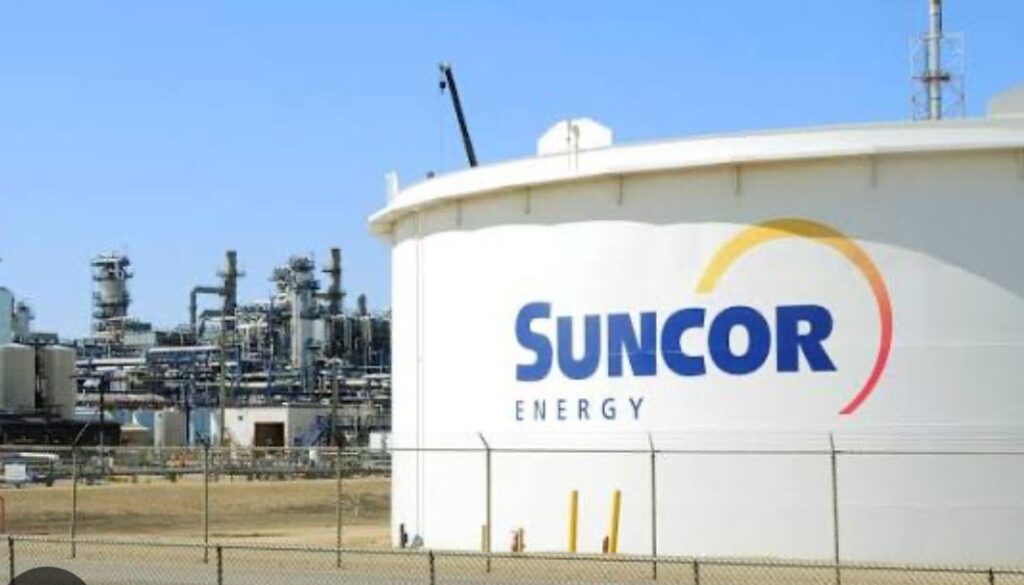
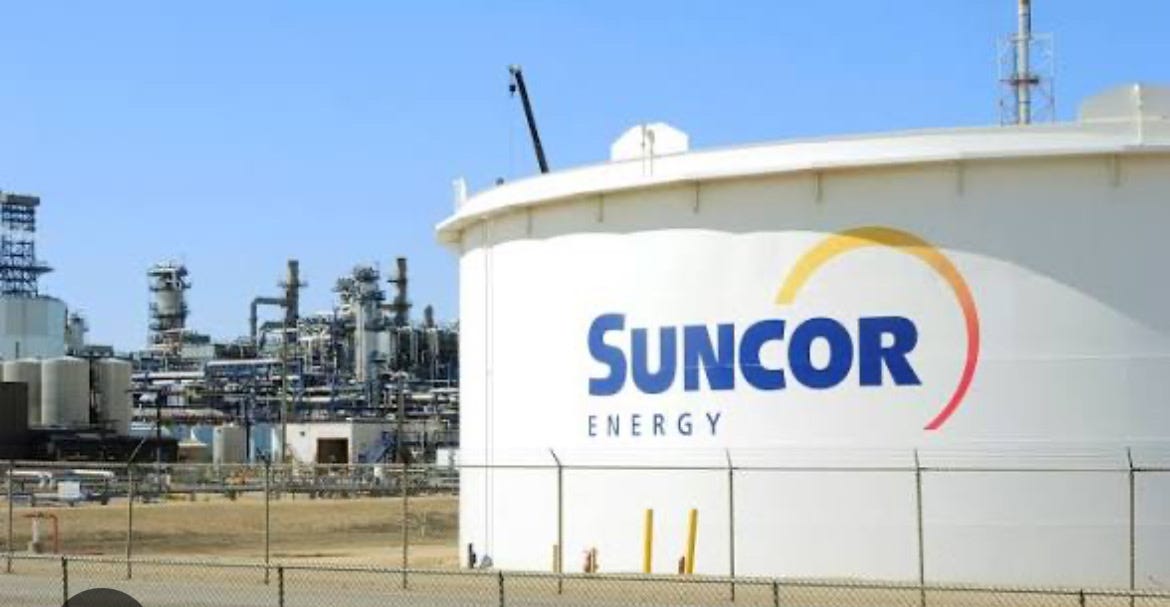
Suncor: Oil Sands and Synthetic Crude
July 2022, Fort McMurray. A worker dies at Suncor’s Base Plant mine, the second death that year, the twelfth since 2014.
Mark Little resigns as chief executive the following day. Elliott Investment Management, Paul Singer’s activist fund, had already gone public months earlier accusing Suncor of a broken safety culture and a lagging share price, and within days of Little’s exit Elliott struck a deal to place three directors on the board, two of whom then sat on the committee that hired his replacement. Alberta’s own Occupational Health and Safety division put the company under special monitoring, and Suncor collected thirty two safety violations between November and January, far more than any peer in the province. This is the company Rich Kruger walked into in April 2023, and this is the company that, less than three years later, posted the best operating year in its history while paying that same Rich Kruger thirty six point eight million dollars in a single twelve month stretch.
THE BUSINESS ITSELF, WHICH LOOKS NOTHING LIKE A NORMAL OIL COMPANY
Every issue this newsletter has run so far describes a company drilling a well and selling what comes out of it. Suncor runs a mining and industrial processing operation that happens to end in a barrel of oil, and the distinction changes almost everything about how the economics behave.
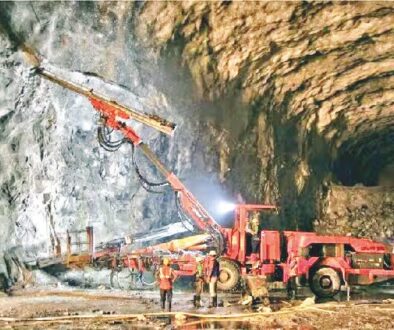
Oil sands bitumen does not flow. At room temperature it behaves closer to cold molasses than crude oil, too viscous to pump on its own, and getting it out of the ground splits into two completely different industrial processes depending on how deep the deposit sits. Where bitumen lies within about seventy five metres of the surface, roughly a fifth of Alberta’s total reserves, companies mine it outright. Suncor’s Base Plant runs two such mines, Millennium and North Steepbank, giant shovels loading the oil sand into trucks that haul it to crushers, where hot water gets added to create a slurry that can finally be pumped. That slurry then sits in separation vessels where bitumen froth rises off the top, still mixed with water and fine solids, leaving behind a tailings pond, the toxic containment ponds northern Alberta has become known for, an environmental liability that exists specifically because of the mining method and does not apply to the other four fifths of Alberta’s reserves sitting too deep to reach with a shovel.
That deeper eighty percent gets recovered through steam assisted gravity drainage, SAGD, the technology running Suncor’s Firebag and MacKay River assets. Two horizontal wells get drilled one above the other, steam gets injected continuously into the top well, and as the surrounding rock heats past two hundred degrees Celsius the bitumen thins enough to drain by gravity into the lower well, where it gets pumped to surface. No mining, no tailings pond, none of Base Plant’s truck and shovel footprint, but SAGD carries its own cost, since heating enough steam to melt an entire underground reservoir consumes enormous volumes of natural gas, and the steam to oil ratio, how much steam a well needs to produce one barrel, is the single number that decides whether a SAGD project makes money or loses it.
Either method leaves a company holding raw bitumen that still cannot go anywhere, since pipelines will not carry something this thick without help. Suncor answers this problem two different ways depending on the asset. At Base Plant, bitumen runs through Upgrader 1 and Upgrader 2, a combined capacity above three hundred fifty thousand barrels a day, where the molecule itself gets rebuilt, hydrogen added or carbon stripped out, turning heavy bitumen into synthetic crude oil that trades close to benchmark prices and can be sold to almost any refinery on the continent. Fort Hills takes the opposite route entirely, running its bitumen through a paraffinic froth treatment that strips out the heaviest components without ever touching an upgrader, producing a partially decarbonized product that needs less diluent and comes in, by Suncor’s own figures, forty percent lower in carbon intensity than Base Plant’s fully upgraded barrel and thirty percent lower than Firebag’s raw SAGD output, an inversion of the usual assumption that mining is dirtier than in situ production, true here only because Fort Hills skips the single most energy intensive step in the entire chain.
Whatever bitumen never gets upgraded instead gets blended with diluent, a light hydrocarbon condensate, thin enough that the resulting mixture, dilbit, can finally move down a pipeline. Dilbit still trades at a real discount to lighter crude, priced off Western Canadian Select at Hardisty rather than West Texas Intermediate, because most refineries, including nearly every one in Canada, lack the complexity to process something this heavy and sour, which is why roughly ninety five percent of Alberta’s dilbit historically ends up at the specific American refineries built with the residue conversion and sulphur removal capacity this crude actually requires. Owning upgraders is therefore not a technical footnote, it is a structural hedge against the WCS discount, since SCO prices close to the benchmarks the newsletter otherwise quotes for every conventional producer, while raw dilbit never fully escapes the discount no matter how efficiently it gets produced.
None of this behaves like the shale economics this newsletter covered. A Permian well can decline seventy percent in its first year alone, forcing constant reinvestment in new wells just to hold production flat. An oil sands mine or a mature SAGD pad declines barely at all once fully developed, the capital gets spent almost entirely upfront in the mine, the upgrader, or the well pads, and the entire subsequent economics reduce to running that fixed asset base as close to its physical ceiling as engineering allows. That is the actual reason a hundred nine percent upgrader utilization at Syncrude and a hundred three percent at Base Plant matter as much as they do in the numbers below. This is not a company finding new barrels the way a shale operator does. It is a company that already owns every barrel it will ever produce from a given asset and is being judged on how hard it can run the machine it already built.
THE TURNAROUND, MEASURED IN RECORDS
Suncor closed 2025 with upstream production averaging eight hundred sixty thousand barrels a day, thirty three thousand more than 2024 and a full company record, alongside record refining throughput of four hundred eighty thousand barrels a day and record refined product sales of six hundred twenty three thousand barrels a day. Fourth quarter upstream production alone hit nine hundred nine thousand barrels a day, synthetic crude oil production reaching a quarterly record five hundred fifty seven thousand barrels a day on upgrader utilization of a hundred nine percent at Syncrude and a hundred three percent at the Base Plant, both running above nameplate capacity simultaneously. Chief executive Kruger told analysts the production and refining teams have not just been breaking records, they have been shattering them at the high end of guidance for two straight years.
The cash generation matches the operational story. Full year adjusted funds from operations came to twelve point eight billion dollars, free funds flow six point nine billion, with roughly five point eight billion returned to shareholders through buybacks and dividends. Net debt fell to the company’s own eight billion dollar target a full year ahead of the schedule Kruger set at his first Investor Day in 2024, hit despite a fourth quarter where adjusted operating earnings actually declined, from one point five six six billion dollars to one point three two five billion, purely on weaker upstream price realizations, since a global supply glut has kept crude prices soft even as Suncor’s own output climbed to records. Net earnings for the quarter still rose sharply regardless, one point four seven six billion dollars against eight hundred eighteen million a year earlier, a gap wide enough that the difference between adjusted operating earnings and reported net earnings has become its own small lesson in why the two numbers exist separately, one measuring the underlying business, the other capturing everything else moving through the balance sheet in a single quarter.
THE ARITHMETIC OF THE TURNAROUND ITSELF
Kruger’s method has been blunt and consistent since his first week. Cut the organization down to what actually generates revenue, sell what does not fit, and hold the rest to a standard he calls best in class. Suncor cut fifteen hundred jobs in 2024 alone as part of a push targeting four hundred fifty million dollars in annual savings, divested oil and gas assets in the United Kingdom and Norway, exited its renewable energy portfolio entirely, and seriously considered selling the Petro Canada retail network before concluding the business would not fetch the premium the company wanted, keeping it instead. Every one of these moves happened inside the same eighteen month window that also delivered the safety turnaround Elliott had originally demanded, and inside the same window Kruger himself collected a first year compensation package worth thirty six point eight million dollars, including twenty three point one million in restricted stock explicitly structured to replace pension benefits he gave up by coming out of retirement to take the job.
There is a real tension sitting inside those two facts sitting next to each other, a company that just cut fifteen hundred jobs in the name of organizational discipline paying its own chief executive more in one year than most of those fifteen hundred workers would earn across their entire careers combined. Kruger’s own framing of the job has been unapologetic about this from the start. He told investors early on that Suncor exists to make money, as much of it as possible, and that everybody starting with himself needs to understand how their role contributes to that goal. The market has rewarded exactly this framing, and Alberta’s own government has increasingly organized its own energy policy around companies that think the same way.
THE POLITICS EVERY CALGARY READER ALREADY LIVES INSIDE
Danielle Smith’s government has spent the better part of a year rebuilding Alberta’s relationship with Ottawa around a single trade, carbon policy flexibility in exchange for pipeline cooperation, and Suncor sits inside both halves of that trade simultaneously. In November 2025, Prime Minister Mark Carney and Smith signed a memorandum committing both governments to work toward a new bitumen pipeline running from Alberta to British Columbia’s coast, capable of carrying more than a million barrels a day to Asian markets. In May 2026 the two governments signed an implementation agreement locking Alberta’s industrial carbon price on a path to a hundred thirty dollars a tonne by 2040, well below the hundred seventy dollar by 2030 trajectory Ottawa had previously set nationally, in exchange for Alberta submitting a formal pipeline proposal to the federal Major Projects Office by July 1 2026, with Ottawa committing to decide by October 1 whether to fast track it as a project of national interest.
Suncor is not a bystander in this negotiation. The company is a member of the Oil Sands Alliance, formerly known as Pathways, the industry consortium alongside Canadian Natural Resources, Cenovus, Imperial Oil, and ConocoPhillips Canada building a multi billion dollar carbon capture and storage network designed to cut oil sands emissions by sixteen million tonnes annually by 2045. The federal government has made completion of that project’s first phase an explicit precondition for the pipeline moving forward at all, which means Suncor’s own emissions infrastructure spending is now load bearing for whether Alberta gets the export capacity its entire industry says it needs.
None of this is settled. No private company has yet stepped forward to actually build the pipeline, forcing Alberta’s own government to act as proponent, spending fourteen million dollars of public money on technical planning specifically to give private capital enough confidence to eventually take over. Federal legislation Smith has spent a year lobbying to remove, the tanker ban on British Columbia’s northern coast and the broader emissions cap critics still call the no pipelines act, both remain in place even as the pipeline proposal itself moves forward, meaning Alberta could conceivably build the line and still lack legal clearance to load a tanker at the other end of it. The earliest realistic date for shovels in the ground sits at September 2027, itself described by Alberta’s own government as a best case scenario rather than a commitment.
WHAT THE TAPE IS SAYING NOW
Suncor’s own results carry the same signature this newsletter has tracked all year in other producers, record output landing inside a market too oversupplied to reward it fully in price. China exports deflation into whatever industry it decides to scale, and 2025’s global oil market ran the same play through supply rather than manufacturing, enough barrels from enough producers that even a company setting production records every single quarter still watched its price realizations fall quarter over quarter. Kruger’s entire operating philosophy, radical cost discipline paired with maximum utilization, is essentially a bet that a company can win a low price environment through volume and efficiency rather than waiting for prices to recover on their own, the same logic Aramco applies at a sovereign scale and the same logic this newsletter’s Halliburton coverage showed can fail badly when a company has no efficiency lever left to pull.
STRESS TEST
Political risk is not hypothetical here, it is contractual. The pipeline Alberta needs to justify further production growth is explicitly conditioned on the Pathways carbon capture project reaching completion, meaning Suncor’s own capital spending on emissions infrastructure has become a precondition for its own future export capacity, a dependency neither governor fully controls.
Safety culture risk never fully disappears once a company has been through what Suncor went through. Kruger’s efficiency first mandate delivered the operational turnaround Elliott demanded, but a culture built around cutting fifteen hundred jobs and maximizing utilization above a hundred percent at every upgrader simultaneously carries an inherent tension with the safety discipline that got the company into this position in the first place, a tension the company’s own record will only fully answer over a longer stretch than two good years.
Commodity oversupply remains entirely outside Suncor’s control regardless of how well the company executes. Record production met with falling price realizations in the same quarter is a company doing everything right inside a market doing the opposite, and no amount of internal discipline changes the global supply picture Suncor’s own results are currently swimming against.
THE INSTITUTIONAL LABEL
Suncor tightens. A company that spent a decade losing workers and losing credibility, until an activist investor and a board reshuffle forced in a chief executive whose entire operating philosophy is subtraction, fewer jobs, fewer distractions, fewer excuses, more barrels out of the same assets running harder than anyone thought they could. It worked, by every operational measure this newsletter can find. Whether it worked in the way Elliott originally demanded, a genuinely safer company rather than merely a more profitable one, is the one number Suncor has not yet had to report back on over enough years to know for certain.
SOURCES
Suncor Energy fourth quarter and full year 2025 results, news release and quarterly report, February 3 2026. The Globe and Mail, Suncor record 2025 results coverage, February 4 2026. EnergyNow, Bloomberg, CBC News, and Mining.com, Rich Kruger appointment and Elliott Investment Management campaign coverage, February through May 2023. The Globe and Mail, Suncor CEO compensation disclosure, March 26 2024. Global News, CBC News, the Prime Minister of Canada’s office, EnergyNow, and the Fraser Institute, Alberta and federal government pipeline and carbon policy negotiations, October 2025 through July 2026.